






















Recently, a neighbour set up a makeshift lemonade stand on the street. So popular was it that my two children, 9 and 12, asked for one too. As a law-abiding barrister, I told them that the neighbour’s stall was probably unlawful and that, if they wanted to sell lemonade, we had to do it properly. I had no wish to be disbarred for unlicensed street trading.

At the time, I had not appreciated what “doing it properly” meant.
The following week, I found myself on a four-hour food hygiene course, a prerequisite for the trading licence. I wrote down the essentials: display all the ingredients, record the origin of the lemons, wear an apron and food-grade gloves, and provide a portable wash basin.
A wash basin!
I began to wonder if the lemonade business was profitable.
I next produced an ‘allergen matrix’, showing that the lemonade contained none of the 14 major allergens, and a five-page Hazard Analysis and Critical Control Point (HACCP) Safety Management Plan identifying potential hazards - from contaminated lemons to flies in the lemonade - and what I was doing to reduce the risk.
Another requirement for trading is public liability insurance. I hesitated over whether to opt for the £5 million minimum or the £10 million limit. I went for the lower figure, hoping that no hedge fund manager or tech bro would slip on a stray lemon peel, fracture a limb, and claim £10 million for two weeks off work.
Having applied for food business registration on the UK government website, I turned my attention to the Council’s Street Trading Application Form, which required a letter from His Majesty’s Revenue and Customs and two passport photographs, signed and dated on the back. By this point, I half-expected to be asked for a stool sample.
In due course, I received a temporary trading licence for a one-day market in London. Flush with bureaucratic success, I bought drink dispensers, a mobile wash basin, 1,000 plastic cups, and enough lemons, water, sugar and ice to supply a small town. Total cost: £439. I was ready for market day on Sunday.
On Sunday, we rose at 7am and started making lemonade at home. Once filled to the brim, the largest of the three containers sprang a leak. The food hygiene course was silent on this scenario. We MacGyvered a fix with judicious use of cling film.
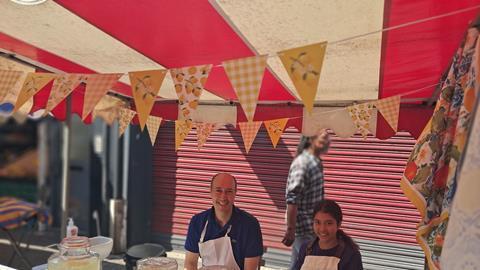
We arrived at the market at 9am to set up the stall. Soon after, a food hygiene inspector appeared. She inspected everything before striding to the portable sink. “Is there hot or cold water in there?” she asked. Having aced the multiple choice test in the food hygiene course, I knew the correct answer was hot. “I’m afraid it’s just cold water”, I confessed. She nodded, and appeared deep in thought. Was this the end of our lemonade adventure, closed before selling a single cup? I could already see the headline: ‘Barrister squeezed out of the Bar over illegal lemonade’. The inspector interrupted my brooding: “Well, it ought to be hot or warm water”, she said, “but I’ll let you off.”
Minutes later, we had our first customer and our first £3 in the bank. Only £436 to go!
There were, of course, a few mishaps. My son’s 9-year-old friend, who was helping out, spilt an entire cup of lemonade on a customer when handing it over. If only we had lids! Fortunately, the customer was not wearing a Savile Row suit and the £5 million insurance policy remains untouched.
By the end of an exhausting day, we had sold 155 cups of lemonade, taking £465: a princely profit of £26. I did not bother to work out my hourly rate.
My children have already asked to repeat the experience. Apparently, these sorts of projects teach children about business, economics and life, so maybe we will. Until then, would anyone like 845 plastic cups with no lids?
Daniel Sokol is a barrister specialising in personal injury and education law.


3 Readers' comments