






















A High Court judge, employment judges and a district judge sitting in the magistrates’ court have all been sanctioned over delays in their judicial work.
The sanctions, published by the Judicial Conduct Investigations Office (JCIO), come amid warnings on the increased caseload expected in the employment tribunal due to law reforms.
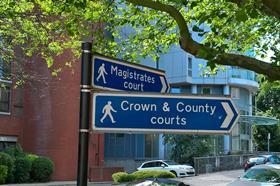
Similar concerns have been raised in relation to the magistrates’ court - though Crown court backlogs have fallen marginally, the open caseload in the magistrates’ court increased by 2% on the last quarter. Cases heard at the magistrates are expected to increase with the Courts and Tribunals Bill, currently at the report stage in the House of Commons, which proposes extending magistrates’ sentencing powers in order for the magistrates’ courts to retain more cases.
In the latest sanctions announcements, the JCIO said it received a complaint from a solicitor concerning a 20-month delay in the handing down of a judgment by Mr Justice Derek Sweeting. The solicitor said they had contacted the court ‘several times’ to chase the outstanding judgment.
The High Court judge acknowledged his ‘personal responsibility to deliver judgments within a reasonable time’. He admitted overlooking the judgment and said this was ‘largely attributed to sustained and heavy workload pressures, including repeated short notice deployment to complex criminal trials’.
He added that during a period of transition in clerking arrangements, he failed to record the case within his tracking system and was unaware at the time of the solicitor’s messages to the court.
Read more
Sweeting was found to have failed to deliver judgment within a reasonable time and a delay of more than 20 months amounted to misconduct. ‘While administrative failures were relevant background, they did not displace the judge’s personal responsibility’.
Sweeting, who had two previous sanctions for delayed judgments (formal advice in 2023 and a formal warning in 2026) was issued with a formal warning by the lady chief justice and the lord chancellor. A more serious sanction would be ‘disproportionate… given the overlap in time with the previous incidents of delay and the fact that there have been no further complaints of delay requiring investigation in the meantime’.
District Judge (magistrates’ court) Stephen Leake was also issued with a formal warning for misconduct. A complaint was made that Leake had not issued a ruling following a Newton hearing for more than eight months.
Leake, who did not respond to the JCIO’s requests for representation, was alleged to have given deadlines for issuing his ruling on several occasions but failed to meet them, resulting in the adjournment or vacation of sentencing hearings.
An investigation found Leake’s ‘prolonged delay demonstrated a failure to display the diligence and care expected of a judicial officeholder and amounted to misconduct’. His conduct was ‘compounded’ by failing to meet the deadlines he set for himself.
Leake, who was previously sanctioned earlier this year over judicial delays, was issued with a formal warning by the lady chief justice and lord chancellor. The lady chief justice and lord chancellor had ‘regard to Judge Leake’s repeated failure to comply with deadlines, and his failure to respond to communications from the parties and the JCIO…and the consequential impact of this conduct on court users and the administration of justice’.
Two complaints were made about delays by employment judge Louise Muir Wilson in relation to written judgments in two separate cases. The delays were over 15 months and nearly three years. Muir Wilson was also alleged to have failed to comply with all requirements to report delays within the timeframes required.
Muir Wilson expressed regret for the delays and explained personal circumstances affected her ability to work over an extended period. The employment judge said in relation to the judgment of the delay of over 15 months, ‘she was under the impression that the judgment had been issued under alternative arrangements during her absence from work’.
The JCIO added: ‘She only became aware that this had not been the case upon receipt of the complaint.’
An investigation found the prolonged delays and failure to self-report amounted to misconduct. The lady chief justice and lord chancellor issued with Muir Wilson, who had an unblemished record, with formal advice.
Employment judge Laura Howden-Evans was also issued with formal advice for misconduct over a delay in determining a reconsideration application. When notified of the complaint, Howden-Evans listed the case for a hearing, more than 22 months after the application was made.
The employment judge apologised for the delay. The lady chief justice and lord chancellors issued Howden Evans, who had previously received formal advice for delays in two cases in January 2026 arising from the same set of circumstances, with formal advice.