















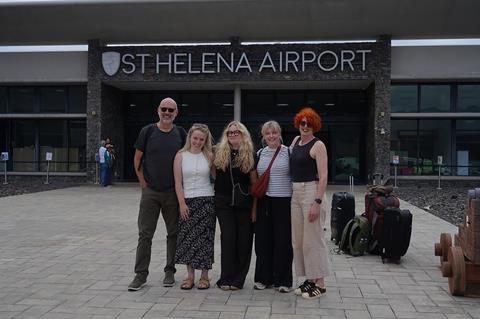
‘On a good day, it’s 48 hours door to door, but that’s very weather-dependent. There’s only one flight a week, at 9am on a Saturday, and half the time it has to turn back as the conditions are too difficult to land.’
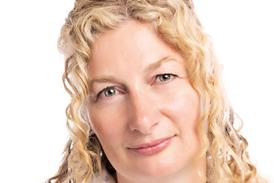
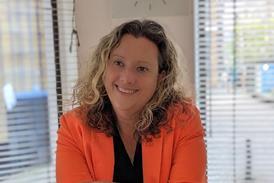
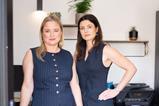
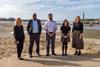
Such is the mission that Ruth Powell (pictured, right) and her team undertake to meet the 145 claimants instructing them from the tiny British Overseas Territory of St Helena. Situated around 1,200 miles off the coast of Angola, the logistical challenge of simply talking to clients is significant, without the added pressure of fighting government reforms, winning the trust of sceptical ‘Saints’ and mounting a jurisdictional battle.
At the heart of the case is a rogue orthopaedic surgeon, Dr Sergio Villatoro Bran, who arrived from Guatemala in 2016 to work in St Helena’s only hospital. In 2023 was convicted of five counts of wounding and given a suspended sentence of 23 months.
The investigation had been led by a retired pair of Met Police officers who were seconded to manage the case. One of the officers had a cousin who was a lawyer, who then referred the case to Powell’s firm Hugh James in 2022.
After more than 30 years in practice, Powell assumed she had seen it all, but she was about to take on a case that would define her career and which she admits is almost all-consuming.
‘I had barely heard of St Helena when we got involved and had no idea this would dominate my personal and professional life,’ she said. ‘It took a little bit of time for the victims to get the measure of me, but before long they accepted me and the help I was able to give.
‘It was certainly a career diversion, but I will never give up on it because what happened to the victims was just so wrong.’
The claimants, who include a child, say they were subject to medical procedures carried out by Villatoro Bran over several years. Many have been left with allegedly life-changing disabilities as a result and question whether they required surgery at all. The issue was first raised when a physiotherapist questioned why so few of the patients had been given any other course of treatment before going under the knife.
In the podcast The Surgeon of St Helena, journalist Luke Jones found one victim who alleged that Villatoro Bran had searched on his phone for information on how to carry out a procedure immediately before doing so.
Following the criminal proceedings, Powell and her team pursued clinical negligence claims against the St Helena government, but last summer the case ran into severe difficulties. The overseas territory’s government brought in legislation in 2025 which effectively prevented the type of conditional fee agreements which had allowed Saints to bring cases. Hugh James challenged these reforms and the government backed down on the eve of a judicial review hearing.
Some of the firm’s clients were offered settlement by the attorney general of St Helena, but Hugh James says these offers did not take into account any financial losses.
‘It is like operating in the wild west,’ said Powell. ‘If the defendant or the court or government don’t like the way it is going, they will change the rules. From a procedural point of view it is completely unacceptable. Sometimes you don’t find out something has changed until after it has happened.’
Following Villatoro Bran’s sentencing, the St Helena Government pledged to establish an independently operated compensation scheme. It said that while claimants would still have the option of bringing a claim through the courts, this could be ‘costly, time-consuming and stressful’, adding: ‘By setting up an independently managed compensation scheme, claimants will now have an alternative to litigation, which should prove more cost-effective for them.’
But the litigation continued, and despite the CFA issue being resolved, issues remain with securing after-the-event cover. The firm is likely to apply to serve outside the jurisdiction so it can issue in the UK.
For Powell, the case has taken on such a significance that she would not contemplate giving up on representing the victims. She has now been to the island 10 times – the lack of internet connectivity and sensitive nature of the discussions mean remote chats are difficult – and is used to being holed up for days on end waiting for the right conditions to fly.
‘It is important to meet people in person to reassure them. We are in this for the long-term because it can’t be allowed that this could happen.’
This article is now closed for comment.






1 Reader's comment