























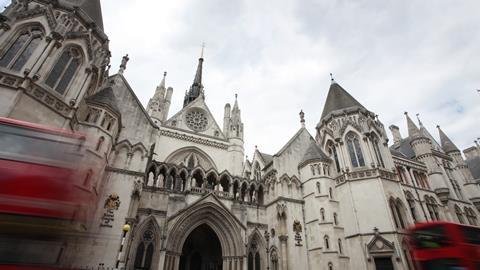
The question of whether claimants in the largest crypto civil recovery case ever to come before a UK court can recover bitcoins worth billions of pounds must be decided in China rather than England, a judge has ruled.
In Director of Public Prosecutions v Zhimin Qian & Anor, Mr Justice Turner ruled on a claim by Chinese victims of a fraudulent investment scheme to have a proprietary interest in 61,000 bitcoins seized by the authorities.
Zhimin Qian, sometimes referred to as the Chinese Cryptoqueen, ran a series of Ponzi-style investment schemes in China between 2014 and 2017, before she fled to London under a false passport. She was jailed for 11 years and eight months in 2025 after pleading guilty to money laundering offences.
The victims of her schemes, all Chinese nationals, were told their money was being invested in digital currency schemes, as well as other projects including air purification devices.
Qian ran the fraudulent schemes through her company Tianjin Lantian Gerui Electronic Technology Co Limited, and another entity known as the Britain Nice Life Insurance Company (BNLI). The former was registered in China, while BNLI is said to be a fictious company.
Before arriving in London, Qian converted part of the funds into Bitcoin. Many of the victims, who invested a total of about £4.1billion, were already compensated to the tune of £3.4billion between 2014 and 2017, through the Chinese courts.
Bank accounts related to Qian's companies were frozen by Chinese law enforcement authorities in July 2017. However under the Proceeds of Crime Act 2002, the Department of Public Prosecutions has recovered several billions pounds’ worth of assets in the UK linked to Qian's fraudulent activities.
The Chinese victims sought to recover these assets under s.281 of POCA, claiming a proprietary interest in the Bitcoin.
The victims asserted that English law should be used to determine whether they owned these assets and therefore were able to recover them, and the court had to resolve whether this was appropriate, if it should be Chinese law, or a mixture of the two. They claimed that they were entitled under equity in English law to rescind the investment contracts entered into and that their payments would then be deemed to be held in a constructive trust, the contents of which they were entitled to trace.
They also cited the principle in sections 305 and 206 of the POCA, governing the tracing of property obtained through unlawful conduct, and asserted that because the relevant property was in England, lex situs (the law of the place) rules apply.
In judgment, Mr Justice Turner noted that Bitcoin is property in England and Wales, which is not the case in all European jurisdictions. He applied EU Regulations Rome I and Rome II, now assimilated into law in England and Wales, and the common law rules of private international law, to resolve the issue of jurisdiction.
‘Looking at the circumstances as a whole, this case is manifestly and overwhelmingly more closely connected with China than with England,’ he found. ‘The representations, the parties, the transactions and the immediate consequences of the alleged wrongdoing were all centred in China.’
It did not matter that the Bitcoin later came to England. The issue of whether the victims own the Bitcoin must therefore be resolved in China, before any claim to recover the significant Bitcoin value can be made under s.281 of POCA.





No comments yet