





















The new government has taken office, ministers have been appointed and departments reorganised. Does the new landscape reflect the underlying forces at work in our sector, enabling us to benefit the country?

In all the endless commentary on our new government - focusing here particularly on its impact on the legal sector – I have seen little consideration of the economics of the legal profession.
Justice is obviously composed of many parts, including courts and prisons. But the Ministry of Justice is also responsible for lawyers, who are now recognised as one of the key drivers of the UK economy. I have described this phenomenon before, when the last government’s trade and industrial strategies were published, both of which recognised lawyers and legal services – principally services provided by solicitors – as being one of the half a dozen key sectors for UK growth.
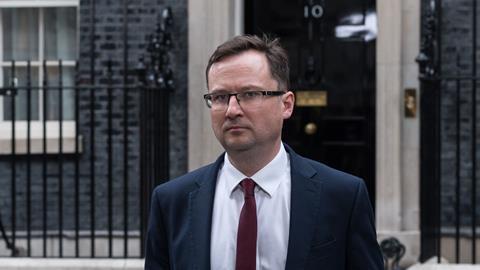
This gains no recognition in the recent appointments. The appointment of the Lord Chancellor is usually a good sign of how seriously the government is going to take us. With the appointment of Alex Norris (pictured), the signs are not good. I am ready to be pleasantly surprised by what he actually does, but the fact that he has no Cabinet experience, was a junior minister in another department until now, and is an unknown (in other words, not a previous heavy hitter who brings a reputation with him) does not fill me with hope. In the opening days, he was told what to do about early prison releases, and we did not hear his own voice.
Read more
Added to that, and I put it lower down my list, although it merely confirms everything that I have said above, he is not a lawyer. In my time in the field of legal policy, I have known non-lawyers who have shone brighter in their knowledge of legal services than many lawyers, and so this may not prove a bar. He also has junior ministerial experience in policing and the Home Office. But the fact that he is neither a heavy hitter nor a lawyer makes me hesitate.
In the rest of the department, there are two barristers and one solicitor in junior ministerial posts, not a perfect reflection (to put it mildly) of the leading role of solicitors in the economy. And – unrelated to the work of the current government, but a further reflection of the old-fashioned and unrealistic way that recent governments have seen us – Keir Starmer appointed a former chair of the Bar (18,000 members) to the House of Lords in his resignation honours, not the first Bar chair to be elevated, while no former president of the Law Society (218,000 on the roll) has ever received a similar honour.
How often do we have to recite the economic contribution of solicitors to the economy before our importance is reflected in public and government life? It is demeaning to have to make our case; it makes us seem needy and pathetic.
The strange thing is that the government has played only a small role in our rise. It is true that staff in foreign embassies and the trade department assist when the Law Society negotiates to open foreign markets for law firms. The occasional visiting minister helps along. But the leading role of our City firms, and the contribution that they and the rest of the legal profession make to our economy through international legal services, including through international arbitration, has come about through lawyers’ own work.
It is now such a significant contribution that people are trying to work out why it has occurred. Government hasn’t brought it about through specific laws and policies, so what has? The Law Society speculates that it may have to do with our stable rule of law. But I have a simpler explanation: the British Empire has left our law and language globally dominant, and solicitors have been clever enough to exploit that for all of our benefit.
There is another side to the appointment of the Lord Chancellor, which should doubtless have come first in my comments (but I am annoyed that our work is consistently overlooked in a ministry structure that remains blind to our economic role): that is the ministry’s vital responsibility for legal aid, for properly furnished courts and a prison system that works.
We may have just lived through a week of give-aways, but we know that tough decisions lie ahead, mainly focused on the need to increase defence spending. Without a bruiser at the helm of the Ministry of Justice, someone with enough political heft to make the case for legal aid brutally against all comers, legal aid and access to justice will stay at the bottom of the ladder. I fear that Alex Norris is not the person to make our case.
But we must hope. Only a week has passed. The MoJ may yet prove our overall champion.
Jonathan Goldsmith is Law Society Council member for EU & International, chair of the Law Society’s Policy & Regulatory Affairs Committee and a member of its board. All views expressed are personal and are not made in his capacity as a Law Society Council member, nor on behalf of the Law Society









3 Readers' comments