


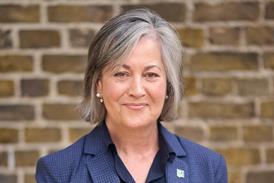














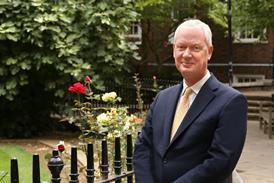
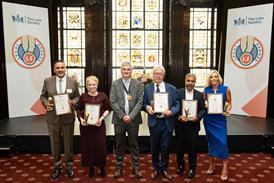



By the end of her third year in office, lady chief justice Baroness Carr will have superintended the departure of three of her most senior lieutenants – the equivalent of a prime minister losing their chancellor of the exchequer, home secretary and foreign secretary. Though, as the UK is about to acquire its sixth prime minister since 2019, the senior judiciary appears a more stable piece of our constitutional furniture than the government.
Appointments were announced earlier this month of two of the country’s most senior judges, amid a period of transition at the summit of the judiciary.
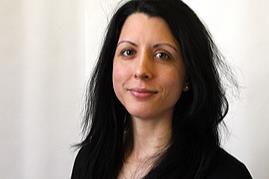
Chancellor of the High Court Sir Colin Birss (pictured) will succeed Sir Geoffrey Vos as master of the rolls, the second most senior judicial post, when Vos retires at the end of October. Lord Justice (Sir Mark) Warby will become president of the King’s Bench Division upon the retirement of Dame Victoria Sharp at the same time. These promotions follow the appointment in April of Lord Justice Cobb as president of the Family Division, succeeding Sir Andrew McFarlane.
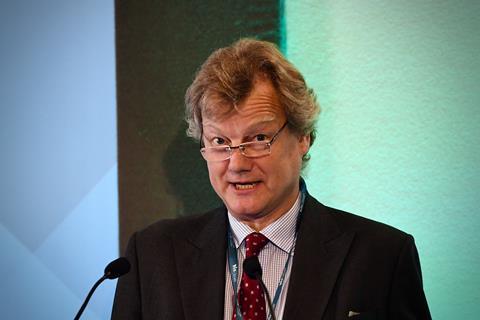
While there has been a change of personnel, observers note, to some degree it is a case of plus ça change, plus c’est la même chose.
The two most recent additions, like most of the senior judiciary, are white, male, former barristers who studied at Oxbridge. Unlike most of their colleagues, however, both are state-educated – albeit at grammar schools. Master of the rolls will remain the only one of the top three judicial posts that has never been held by a woman.
Cobb is also a male, former barrister. He is public-school educated (Winchester) but attended the University of Liverpool.
Annual statistics published by the Ministry of Justice last week again expose the lack of diversity on the senior bench. There is one minority ethnic judge at the Court of Appeal and there are nine on the High Court bench.
Commentators agree, nevertheless, that the newly elevated judges are highly able, intelligent and personable.
‘They are all modern, nice blokes – none is the old stereotype of boorish, rude judges,’ says one retired senior judge. ‘All will do a brilliant job and make the image of the judiciary more friendly, modern and accessible.’
Observers play down the significance of the appointments coming in the same year and within one to two years of new appointments to two other senior posts. Lord Justice Dingemans replaced Sir Keith Lindblom as senior president of Tribunals last August, while Lord Justice Green succeeded Lord Justice Edis as senior presiding judge in October 2024.
‘It is not a revolution, just a coincidence, with one lot of people being replaced by a list of names that everyone thought was likely – and spectacularly uncontroversial,’ said one source close to the senior ranks of the legal profession. Another adds that the changes are viewed ‘with a sense of opportunity and hope’ rather than concern.
There is more to do, of course. Chancellor of the High Court – a title that in October will morph into that of president of the Business and Property Division following the scrapping of the Chancery Division – is a key post that will need to be filled by another senior judge.
Sir Colin Birss, a former intellectual property specialist, appears keen to pursue the present MR’s interest in technology and artificial intelligence in particular. He began his judicial career as a deputy chair of the Copyright Tribunal in 2009 and in 2023 became the lead judge for AI.
The creation of the new business and property court, notes one retired senior judge, will mean that Warby LJ, a former media specialist barrister and the most senior media law judge, will ‘lose a third of his dominion’. A retired criminal judge hopes that Warby, who will be in charge of the deployment of High Court judges to try criminal cases, has sufficient understanding of the Crown court. The judge says that ‘a modified approach there would be helpful’, but questions whether change is likely.
Another retired judge notes that the senior judiciary ‘don’t do much judging’. They lament the ‘lost possible line of Cobb judgments’ in the Family Court.
And then there is the LCJ. Her five predecessors served for an average of four years, so Lady Carr may be gone in 18 months if that trend continues.
At the Supreme Court, meanwhile, Lord Stephens is set to retire next year. Many predict his place will be filled by Lord Justice (Sir Rabinder) Singh. Singh (fee-paying Bristol Grammar School, Cambridge) was the first person from any black, Asian or minority ethnic community to join the Court of Appeal.
President of the Supreme Court Lord Reed is retiring next January. Lord Sales, who became deputy president of the court this year, is tipped to succeed him. Many hope that one of the two women on the court – Lady Rose or Lady Simler – will be the next deputy president.
Catherine Baksi is a freelance journalist and qualified barrister









No comments yet