












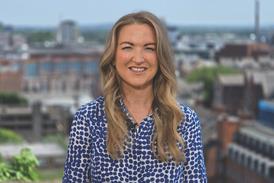
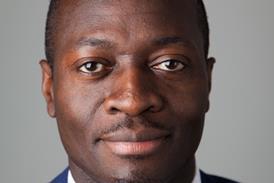




I was interested to read the article by Steven Friel, solicitor and Stonewall trustee: ‘The bathroom is an old battlefield’ (19 June, tinyurl.com/4hyhhu33). Here is my reply.
Friel claims that excluding ‘trans women’ – biological men who identify as women – from female toilets is comparable to the historic exclusion of women from the legal profession, gay men from the armed forces and the racism of the American South under Jim Crow laws and South Africa under apartheid. Nonsense. These historical exclusions were based on false beliefs about one group’s superiority over another and lacked any scientific or factual rationale. There is an abundance of evidence that women’s needs differ from men’s and that women have good reason to fear men, however those men identify.

Every human being is either male or female. Sex does not change when someone transitions, whether they simply change pronouns or take cross-sex hormones and undergo cosmetic genital surgery. On average, males are physically stronger, larger and more aggressive than females. Males commit the vast majority of crimes, especially those that are violent or sexual. They are responsible for nearly all voyeuristic crimes, too. Women are far more often victims than aggressors.
Academic research shows trans-identifying men commit crimes in line with the statistical norms for men in general, not for women, and that they are more likely to be perpetrators of homicides than victims.
Friel says that trans people are more likely to be victims than perpetrators of harassment. That may be so. But it does not change the fact that women are at risk from trans-identifying men to the same extent as they are from other men, if not more so. It is not acceptable to take away women’s rights in order to accommodate a few men, no matter how vulnerable those men are.
Single-sex toilets are important not only for women’s safety, but also for women’s privacy and dignity. Unlike men, women always have to remove clothing to go to the toilet. They must also manage menstruation, pregnancy and postpartum issues and other intimate needs. Polling shows that most people (of both sexes) prefer facilities such as toilets and changing rooms that are single-sex to mixed-sex ones, and that many women and girls avoid mixed-sex facilities altogether. Observant Muslim and Orthodox Jewish women cannot use public sanitary facilities unless all men are excluded.
Human beings are extremely good at recognising other people’s sex. When a man comes into our space – even if he is trying his hardest to look like a woman – we will almost always know. We cannot tell whether any particular male person is a crossdresser, identifies as non-binary or trans, or is taking advantage of the idea that it is inappropriate to challenge a male person in a female space. We cannot know whether he wishes us harm.
Privacy, dignity and propriety are the reasons why single-sex toilets exist in the first place. This is why the law recognises such facilities as important, and why they are expressly permitted in the Equality Act and mandated in statutory workplace and school regulations.
Accuracy about sex matters in many other situations and places. Take sport. Right from early childhood boys are on average taller and heavier than girls, and even before puberty, they are typically stronger and faster. During puberty, the gap widens immensely, and the physical advantages conferred by testosterone-driven development are permanent.

Every year, thousands of teenage boys break speed and strength records in athletic endeavours, from running to swimming to throwing, set by the world’s best women. Allowing males of any age to compete in girls’ and women’s sports – or not having a separate female category – is therefore unfair to women.
Sex also matters in domestic violence refuges and prisons, and in mental health counselling and therapy groups. Women-only groups for career support and networking enable women to discuss the challenges and experiences unique to women’s lives, and to work together without men dominating the discussion.
The Supreme Court decision in For Women Scotland confirmed that in the Equality Act 2010, sex means biological sex. This, it concluded, was the only interpretation that protects women’s rights. The ruling does not require the exclusion of trans people from public facilities in general, and the Equality and Human Rights Commission’s draft services code emphasises that this would be wrong. Everyone can use the spaces and services for their own sex, or, if they prefer, unisex or mixed-sex alternatives where those are available – as they typically are.
The existence of exercise classes, sports events, support groups – and, yes, toilets – solely for women or men does not exclude trans people from the numerous and widely available services for both sexes. New and refurbished buildings have long been required by building regulations to provide accessible single-user toilets.
Will future generations look back at the current moment with embarrassment, as Steven Friel thinks? Perhaps. But it won’t be respecting women’s privacy in single-sex spaces and services that makes them cringe. Rather, it will be the last 10 or more years when women’s needs, comfort, safety and inclusion in public life were set aside to accommodate a tiny number of men who identify as women, until For Women Scotland at last re-righted the balance.
Monica Kurnatowska is a solicitor specialising in employment and discrimination law. She volunteers as a solicitor for the human rights charity Sex Matters





No comments yet