












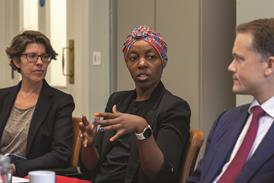











Who? Asima Rana, director, DWF, Manchester.
Why is she in the news? The firm successfully represented trade association Dairy UK in the Supreme Court, which dismissed an appeal by oat drink company Oatly over use of the term ‘Post Milk Generation’.
Thoughts on the case: ‘This was a significant case not only because it reached the Supreme Court, but because it clarified the relationship between trade mark protection and sector-specific regulation. At its heart, the dispute concerned how trade mark law operates alongside regulatory frameworks, and whether established legal protections continue to function effectively as markets and branding strategies evolve. From the outset, our focus was firmly on statutory interpretation rather than broader debates about branding or marketing. The central issue was how the legislative framework was intended to operate in practice, and how concepts such as “designation” should properly be understood within that framework. Maintaining that focus became increasingly important as the case progressed through multiple appeals and ultimately enabled the Supreme Court to provide clear and authoritative guidance. The judgment is therefore a welcome one. It reinforces the principle that trade marks do not exist in isolation and that regulatory context matters when assessing questions of registrability and use. While the case arose in the food and drink sector, the principles outlined by the court are likely to have wider relevance across other regulated markets.’
Dealing with the media: ‘The case unfolded against a wider and often polarised debate around plant-based and dairy products, which inevitably shaped some of the media commentary. From our perspective, it was important to put that to one side and remain focused on the legal issues before the court. Throughout the litigation, we prioritised explaining those issues clearly and consistently, particularly given the length of the case and how it evolved on appeal. Grounding the discussion in the practical, real-world implications for businesses operating in regulated markets helped maintain focus and perspective.’
Why become a lawyer? ‘I was drawn to law because I enjoy working through complex problems and seeing their real-world impact. Intellectual property appealed to me for its blend of careful legal analysis and close involvement in commercial decision-making, often in fast-moving, competitive markets.’
Career high: ‘Taking a case to a successful outcome in the Supreme Court is a real career highlight. Not just because of the result, but because of the collective effort involved, the trust built with the client, and the shared commitment of the team.’









No comments yet