























The recent Intellectual Property Enterprise Court decision in Conrad Lant v Plastic Head Music Distribution Ltd & Anor [2025] EWHC 1954 provides lessons for us all to learn about intellectual property.

While this case involved a dispute over the rights of former members of the metal band Venom, the judgment serves to inform practitioners of what they should be telling clients about IP ownership when they take their first tentative steps to form a business.
Facts
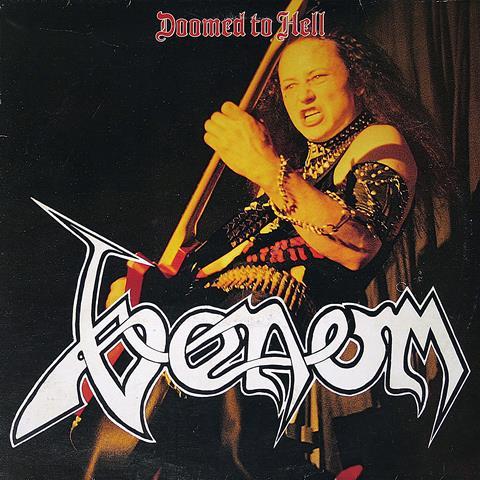
Formed in Newcastle in 1978, Venom were pioneers of a genre known as ‘black metal music’. The band’s artwork and branding were integral to its success. Band members assumed logos and album cover designs were ‘shared’ assets when marked with the band’s name, but this was never formally documented.
The question the court had to answer was who owned the copyright in the artwork and logos associated with the band. Was it the defendant and former drummer Anthony Bray, or the claimant and former band vocalist Conrad Lant, or the band? Both Lant and Bray had independently licensed the band’s artwork for use on merchandise and both claimed ownership of the copyright.
Unfortunately (although some might say unsurprisingly), there were no agreements in place dealing with the relevant copyrights, leaving the court to rely on the memories of witnesses involving events from the late 1970s and 1980s.
The decision
Bray was found to own the copyright in the original Venom logo primarily on the basis that Lant did not join the band until a year after it was established.
Amazingly, despite the passage of time, Lant was able to provide evidence that he created a number of the designs in the form of original sketches, meaning he could prove he owned the copyright in most of the disputed artworks.
Why is this case helpful?
This case highlights an issue generally applicable to all businesses. IP created by individuals is owned by them unless formally assigned.
Therefore, do not assume that just because IP is used in a business that it will be owned by that business.
When looking at the nature of a particular business, the court needs to consider the legal entity it is dealing with. Typically, rock bands are treated as partnerships. This means that as partnership assets, IP is owned jointly by all band members unless there is a clear agreement stating otherwise.
Joint ownership via a partnership sounds simple, but in practice, it creates significant challenges:
- Disputes after departure: when people leave, the remaining members of the group retain the IP rights as the continuing members of the partnership.
- Complete dissolution: if all band members decide to call it a day, then there should be an agreement to determine what happens to the partnership assets, including the IP rights.
- Rights created outside the normal activities of the band: a rock group’s primary purpose is to make music and so it does not necessarily follow that, for example, designs created by a band member for an album cover are partnership assets.
- Pre-existing rights: the first owner of copyright is the creator and so, anything done before the band member joined the group will be owned by the band member and not the group.
For Venom, decades of informal collaboration meant that when merchandise deals emerged in the 2020s, both Lant and Bray claimed rights, leading to the litigation.
Relevance for commercial clients
All businesses have a name and many rely on the likes of logos, software code and/or product designs. Practitioners are often consulted when a successful sole trader decides it is time to incorporate the business into a limited company. It is at this point that a simple IP licence or assignment can prevent disputes emerging years later. Practitioners should also be careful to update the ownership records at the UK IPO (and elsewhere) for any registrations for trade marks, patents, and designs, and record any licences against the registrations.
Conclusion
Whether you are advising a band, a start-up or an established business, IP assets should be audited and the ownership ascertained. Venom’s dispute in Lant v Plastic Head demonstrates the dangers of informal arrangements and how they can result in years of uncertainty and eventually litigation between former business partners.
Asking witnesses to recall events from over 40 years ago is fraught with difficulties and can have serious consequences if parties to deals are found not to own what they say they own. This will place them in breach of warranties as to title and result in the termination of their agreements for the exploitation of the IP rights. Competing claims as to title can also mean that a business is not able to enforce its rights because it cannot prove ownership.
Iain Connor is a partner at Michelmores, London









1 Reader's comment