




















Partner, London
Solomon Ebere was destined to become a lawyer. With family connections across the globe, ‘there was a lot of international affairs being discussed at home and a lot of conflict resolution’. Also, most of his relatives are artists. ‘They always wanted to have a lawyer in the family to protect their interests.’ Solomon’s grandfather wanted Solomon’s mother to become an artist, ‘but she went into fashion, so it came to me’.
Solomon’s legal education took him to La Sorbonne in Paris and Georgetown Law School in Washington DC. He then worked for leading arbitrator and mediator Edna Sussman in New York for a year. ‘Edna had just left White & Case. The great thing about Edna is I spent a year clerking and shadowing her. She was doing a lot of arbitrations as a judge. It enabled me to see how different practitioners would advocate and introduced me to important people at the time. We’re still in touch. When news broke that I joined RPC, she sent me a lovely email.’
Solomon moved to Switzerland to be closer to his grandparents and worked as an associate at a top law firm doing commercial arbitration work. He then headed to Paris, working at a firm that specialised in investment arbitration. He moved to London a decade ago. ‘I’m now a British citizen, a French citizen, a Nigerian citizen and US citizen.’
Solomon spent five years at Omnia Strategy, the law firm Cherie Blair founded. ‘Cherie Blair is a formidable lady and a great example of a successful woman.’ Prior to joining RPC, he was at DWF for four years.
What does Solomon enjoy about international arbitration and dispute resolution work? Investment arbitration, he explains, involves a mixture of commercial and non-commercial interests.
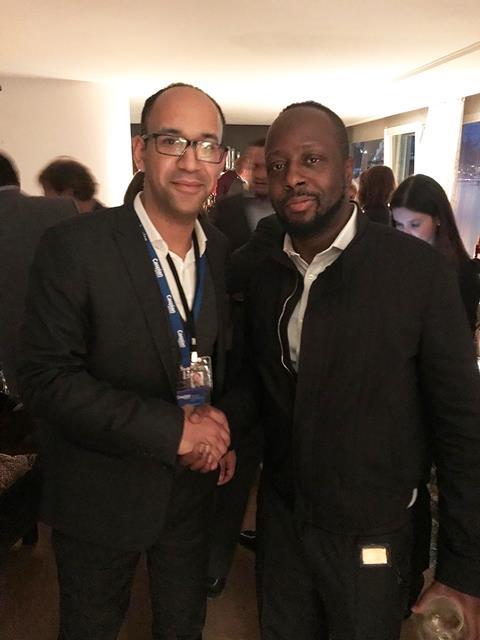
'I attended an event where there were heads of state and Wyclef Jean from the Fugees. He was my first concert when I was in Paris'
‘For example, you have a politician who, while campaigning, made a promise to change the energy system which is broken in that jurisdiction,’ he explains. ‘It turns out, in the real world, when you become president and ask the government to do that, that will involve cancelling or terminating high-value contracts with electricity providers. That can be a real problem financially for the government. How do you implement that campaign promise to people but prevent the government from being fined hundreds of millions of dollars? Investment arbitration combines law, politics, PR, commercial and non-commercial interests.’
Solomon is more interested in negotiated outcomes where everyone wins rather than winning in court. ‘Winning in court is great, but even better is when you can better the lives of people.’
Having lived and worked in New York, Geneva, Paris and London, which is his favourite city? ‘London. It’s a very civilised place. Very civilised colleagues. I’m Nigerian Ghanaian – there is a large diaspora. It’s very close to Paris. It has an international outlook. I’ve found working here to be amazing.’
Asked about career highlights, he lists three. The first is arbitration-related: ‘When I was cross-examining a sitting minister from a Francophone country, my colleagues and client were all English-speaking and discovered a new me. They heard me in French for once. Cross-examining a minister is always fun, but to do it in a language that’s not my main professional language was really nice. The look on the faces of my colleagues.’
The second highlight centres around networking. ‘I used to go to the World Economic Forum in Davos when I was at Omnia. I attended an event where there were heads of state and Wyclef Jean from the Fugees. He was my first concert when I was in Paris.’ Jean would later serenade Cherie Blair in front of the whole room.
And the third highlight: going to the grand opening of a client’s hotel, where Solomon met his wife.








No comments yet