





















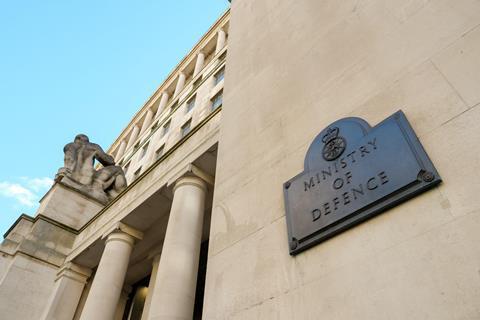
The Ministry of Defence has suffered a defeat in the costs court after trying to suggest that a law firm had over-inflated its schedule of costs.
It had been claimed in Henderson & Anor v Ministry of Defence that Hugh James, the firm leading thousands of hearing loss claims, had tried to ‘induce the paying party to overpay’ by sending schedules of costs that were much higher than the bills finally produced.
The national firm denied any form of unambiguous impropriety – the legal test applied by the judge – and maintained that the schedules were accurate estimates of all the costs incurred and payable.
Costs Judge Whalan accepted there was a difference between the schedules and later bills but concluded that the MoD’s allegations that schedules included costs not actually incurred was incorrect.
He said: ‘The breakdowns contained no fundamental errors of calculation and there was no misrepresentation.
‘The schedules represented the claimants’ actual incurred costs and any inconsistency in the claimants’ without prejudice and subsequent open positions was a long way short of any form of CPR44.11 misconduct.’
He added that the MoD’s case ‘falls a long way short’ of demonstrating impropriety and that the defendant was not entitled able to rely on the schedules during part-heard detailed assessment of the final bills.
Three individuals brought claims against the MoD for damages for deafness sustained in the course of their military service. These are part of a substantial cohort of noise-induced hearing loss claims: Hugh James is conducting around 11,500 such claims, which is believed to represent less than 10% of the overall caseload.
The first claimant’s action settled in 2023 for £65,000 plus reasonable costs on the standard basis. Hugh James served a costs schedule for around £45,000, then later submitted a bill which was reduced by £7,700. A second claimant’s bill of costs was some £30,000 reduced compared to the schedule.
The MoD said there was a ‘stark’ disparity between the costs schedules and the bills and submitted that production of ‘inflated’ schedules could not be justified.
Hugh James maintained that the hourly rates and time claimed in the schedules were accurate and reflected the costs actually incurred. When external costs lawyers had looked at the schedules, certain items were excluded from the final bills, but there were no fundamental errors of calculation and no misrepresentation.
The judge said more could have been done to rationalise the costs outlined in breakdowns served on the defendant, but he accepted there was indeed no misrepresentation.
This article is now closed for comment.





3 Readers' comments