

















Campaigners have called for the Solicitors Regulation Authority to publish data on closed cases, amid concern that potential horror stories are slipping through the net.
The access to justice charity Blind Justice has published figures showing that there are thousands of cases shut down at assessment stage which then disappear from view.
No information is published by the SRA about why cases were closed or whether closed reports involved repeat complaints about the same firm. Edward Romain, founder and chief executive of Blind Justice, said there is not enough public information to allow the public, the profession, parliament or the Legal Services Board to test whether case closures are safe.
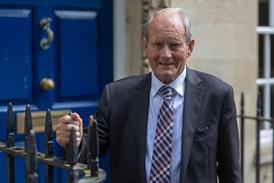
In an open letter to SRA chief executive Sarah Rapson, Romain said: ‘Recent failures at Axiom Ince, SSB Group, and PM Law demonstrate why this matters. Together, those matters involve more than £300m in known or suspected client-money shortfalls, firm debts, and consumer exposure.
‘The public cannot currently see whether the SRA’s closed-complaint pile contained earlier warnings about the same risks that later materialised. That is the complaints black hole.’
Read more
In 2023/24, the SRA received 11,852 reports about solicitors and closed 8,317 before any investigation began. Only 510 led to a regulatory finding, with nothing publicly disclosed or analysed about the remainder. Since 2017/18, the proportion of reports referred for investigation has fallen from around 53% to around 15%. The issue is likely to become more acute in the next year, when complaints are expected to rise and the SRA potentially relies on automation to filter out complaints that do not need further investigation.
A briefing prepared by Blind Justice sets out that the first point of call of the SRA complaints process is the Assessment and Early Resolution Team. The AERT test is whether the conduct, if proved, would amount to a breach of SRA rules, whether there is a realistic prospect of a regulatory finding and whether an investigation would be proportionate. The report is closed if any of these three measures are not satisfied.
The Blind Justice report points out that the test is not published in operational detail and the SRA does not publish the internal guidance given to AERT officers on how to apply it.
‘There is no public record of how individual closure decisions are reached,’ it adds. ‘The system operates, in effect, as a closed process applying unpublished criteria to determine whether the public’s concerns about their solicitors deserve examination.’
The SRA can reconsider a decision if a complainant provides extra information, but there is no independent review and no external scrutiny of individual closure decisions, with no formal right of appeal.
The briefing recommends that the SRA should publish annual AERT closure data disaggregated by allegation type, firm type, repeat respondent, risk category, geographical area, and later outcome. It also wants a formal complainant review mechanism with independent external oversight to be established.
The briefing has been shared with the LSB and the justice select committee. The SRA is believed to be preparing a detailed response.
Blind Justice is a registered charity founded by Romain after he appeared as a litigant in person in the court and started documenting the issues he was experiencing.




2 Readers' comments