






















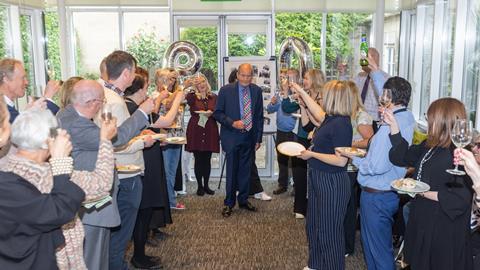
When Jeremy Thring started his training to be a solicitor in 1957, Harold Macmillan was entering Downing Street and Sputnik 1 kick-started the space race.
Having recently turned 90, Jeremy continues to work as a consultant and regularly meets with clients and colleagues in the office.
After spending his entire legal career with south west practice Thrings, his firm recently marked his birthday with a gathering in the office, attended by current and former employees, family and friends. Jeremy’s reaction was that he ‘would honestly rather they spent the money on themselves or the staff’, but he added: ‘The people here are terribly kind, to me and to each other, and they seem to want to do a good job – to keep the clients happy – which is really what I want them to do.’
Jeremy qualified in 1962 when the Bath firm had around 40 staff serving landed estates, farming families and trusts – valued work, but limiting the potential growth of the business.
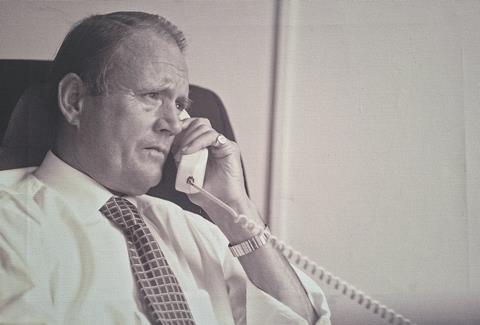
‘The firm really had to change. We had a very good portfolio of clients which was very nice because you got to know the families, but we didn’t do any litigation and very little corporate work. We were just too small.’
Jeremy spent 17 years as senior partner during which he oversaw a series of acquisitions and offices being opened in Bristol, Swindon and London. He targeted a merger with Titley, Long and Co. in order to hire Thomas Shepherd as managing partner.
'I’m more naturally a chairman, but he was a chief executive type – a do-er,' said Jeremy. ‘He gets it done, and I could see that.’
Almost 70 years in the law means Jeremy has been present through the transformation of the legal profession. He stressed there have been positive changes, although he lamented that the speed of communications is almost ‘too good’ with the pace of work hastening and no ‘delay in the post’.
‘In this day and age, a lawyer has got to be bloody brilliant if they have no communication skills,' he says. 'The client wants and expects a good job.'
‘I read a lot about how AI is and will continue to affect us. I can see it being very beneficial in many ways. For some firms it might mean they can do with employing fewer people, but I don’t think that is a solution.’
He added that there was a need in his view for spending as much time and energy training up juniors as on introducing new technology – suggesting he has always been ‘a people person’.

The culture of the profession has shifted too, and not entirely for the worse. ‘We didn’t have HR back then to monitor workloads. Bosses are more educated in looking after their staff now – a nice point, but also a necessity.’
His career has featured some stand-out moments, not least when he had to hire a punt to rescue a client from a flooded house. But his legal life needed a little jolt in the early days: Jeremy had enlisted in the army in 1955 and was posted to Germany as anxiety around the Cold War had increased. He wanted to extend his service, but was told by his father, the Thrings senior partner, that it was time for him to grow up and come home.
He describes his early days as the ‘miserable business’ of articles, but meeting his future wife Cynthia changed his outlook.
‘When you love someone, you want to do your best for them, to make them proud,’ he said.
‘She was pretty, strong and gentle, and just wonderful. We were together for many years until her passing six years ago and because of her I have two lovely daughters, five grandchildren and one great-grandchild. We are a very close family, which is a blessing.’
This article is now closed for comment.





12 Readers' comments