






















Lawyers have urged firms relying on AI systems to be ultra cautious and sceptical about the information they are being told, following one of the most talked-about failings in recent years.
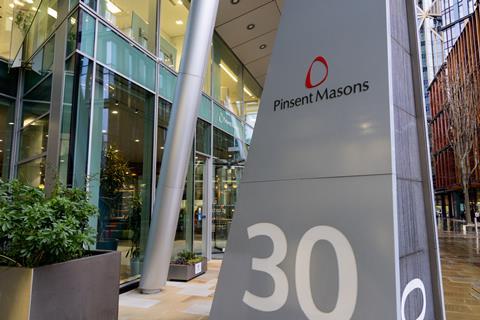
It was revealed in a judgment last week that international firm Pinsent Masons had referred itself to the Solicitors Regulation Authority after twice misleading the court based on search results from an internal AI system.
Three solicitors, ranging from partner level to junior lawyer, will also be subject to enquiries from the SRA as it establishes – as ICC Judge Mullen alluded to – whether there had been a breach of the duty not to mislead the court.
Letters were sent to the court which misapplied the law based on responses from the junior lawyer’s chats with AI. These letters were checked and signed off by her senior colleagues who were not aware of how AI was being relied upon in the research and draft phases. Even when the AI warned its answers may not be entirely reliable, there appeared to have been no further checks to verify what it was saying.
The firm has apologised and resolved to put safeguards on its use of AI.
Read more
In depth: Law Society risk and compliance conference - Put AI on your risk agenda, firms told
The case has prompted a flurry of commentary from lawyers across social media, as well as speculation that this may be a wider issue as firms increasingly rely on AI for legal tasks.
There are particular questions being raised about the training and oversight of junior lawyers.
Barrister Edward Levey KC, a professional negligence specialist, said this case serves as a salutary reminder not only about the risks of over-reliance on AI, but also of senior lawyers relying too heavily on junior colleagues and the need for effective supervision.
He said: ‘It seems to me that one of the real problems with AI is that it gives junior lawyers more confidence than they might otherwise have and makes them less inclined to ask for help.
‘At the same time, its use by junior lawyers risks giving the impression to the senior lawyers that they have more knowledge and experience than is actually the case - and so the senior lawyers are less hands-on when it comes to supervision and too quick to take what the junior lawyers say at face value. Taken together, this is a dangerous combination.’
Solicitor-advocate Luke Tucker Harrison, managing partner with London firm Keidan Harrison, said his practice had developed a ‘traffic light’ system for knowing when to use AI and when to treat it with caution.
The use of AI for court-facing documents – even for first drafts – was a ‘red’ light and considered too dangerous.
AI could support legal research and verification but only with accompanying checks, and junior lawyers had to be able to research and verify legal principles from primary sources.
‘We require our junior lawyers to always disclose their use of AI to supervisors and client,’ said Harrison. ‘That way when reading output a supervising lawyer is alert to what questions to ask and what to check.’
He added: ‘We should all absolutely be using AI in our practices to deliver our services faster and more cost effectively as well as to free us up from low complexity administrative tasks. We should do so without fear or miscalculated risk aversion.
‘The problem we are repeatedly seeing across the profession arises from a combination of the unprecedented technological advancement created by AI which has led firms to rapidly deploy solutions before really understanding how they can and should be used for which training is key.’
Richard Dawson, an AI consultant to law firm leaders, said this was not just a failure of individual curiosity but reflected more structural issues in law firms.
He added: ‘I see far too much reliance on the "false comfort" of a 10-page AI policy PDF sitting unread in an inbox. In my experience, law firms are under massive competitive pressure, so this is the inevitable result. Junior fee-earners eager to turn work around quickly, yet the firm’s IT infrastructure allows them to access unmonitored, generic AI tools on their phones or browsers to hit targets.’
Meanwhile, an SRA spokesperson has said it is aware of the report that Pinsent Masons has made, and it is looking into the matter before deciding on any potential next steps.





1 Reader's comment