














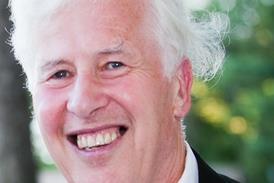





An experienced solicitor who agreed to act as a security trustee as an ‘almost favour’ for his client was in ‘obvious’ conflict with his solicitor role for the lender, the collapsed investment scheme London Capital & Finance, the Solicitors Disciplinary Tribunal has found. Alexander William Bruce Lee, who qualified in New Zealand in 1984 before his admission in England and Wales in 1991, was fined £30,000 for causing harm to the reputation of the profession.
Lee was director and owner of 50% of the shares of Global Security Trustees Limited (GST), in which he was acting as security trustee protecting the interests of bondholders ‘notwithstanding an obvious conflict in doing so (or significant risk thereof)’ given his previous and subsequent instructions for LCF. He was alleged to have breached principles 2 and 6 of the SRA Principles 2011 and breached outcome 3.4 of the Code of Conduct 2011.
Lee denied the allegation. It was found proved in its entirety by the SDT.
LCF, the SDT judgment noted, raised £237m from retail investors by selling mini bonds. LCF advanced the money raised to connected companies associated with four individuals, one of who was LCF chief executive Andy Thomson, whom Lee took instructions from when acting for LCF. Lee ‘was aware at the material times that [Thomson] has some form of “residual interest” in the borrowers. That position…was not disclosed to bondholders’.
LCF’s business was later found to amount to ‘fraudulent trading and was in effect a Ponzi scheme’. It closed following a Financial Conduct Authority raid in 2018. There was ‘no suggestion’ Lee was involved in the fraud, the judgment said, adding he was ‘caught up in the fraud like other parties’.
Read more
The tribunal ‘noted…Mr Lee’s accepted failings…of his obligations and duties as a solicitor’.
The three-person panel said it was ‘satisfied’ that Lee’s role as director and security trustee of GST while acting as a solicitor for LCF on lending transactions funded by bondholder’s money were ‘two sets of obligations…structurally and diametrically opposed’.
The judgment said: ‘The interest in avoiding personal breach of fiduciary duty, and in reconciling incompatible legal responsibilities, was a clear own interest conflict for regulatory purposes. The risk was not remote or theoretical. It was present from the outset of Mr Lee’s appointment and persisted throughout the relevant period.
‘The risk crystallised as concerns arose regarding security assets and particularly following the FCA intervention and the appointment of administrators. At each of those stages, the prospect of conflict was obvious, foreseeable, and significant.’
Finding that Lee ‘should never have accepted the role as sole director and security trustee of GST’, the judgment said: ‘Mr Lee took on the role “almost as a favour” to [Thomson].
‘His decision was materially influenced by his existing relationship with LCF and its CEO, rather than by a detached and principled assessment of whether it was appropriate for him, as a solicitor acting for LCF, to assume the role of security trustee for the bondholders.’
Lee made a ‘conscious professional judgment to accept the role’ which was ‘not…consistent with the ethical standards of the profession’. He ‘knew, or should have known, that the role of security trustee carried fiduciary duties owed exclusively to bondholders, and that those duties were liable to place him in opposition to the interests of his client, LCF’, the SDT said.
Lee, who had a previously unblemished career, was fined £30,000 and ordered to pay £50,000 costs – a reduction of the SRA’s application for £78,654.40 due to ‘some duplication of work’ and to reflect Lee’s means and the ‘totality of its findings in financial terms’.