





















A commercial super-silk’s £2,000 hourly fee has been cut sharply for his pre-trial work in the setting aside of two arbitration awards totalling $11.1billion.
The Federal Republic of Nigeria and oil company Process & Industrial Developments Ltd (P&ID) are arguing preliminary issues before Costs Judge Brown over the country’s bill of costs.
In 2023, P&ID was found to have secured two arbitration awards by ‘practising the most severe abuses of the arbitral process’. P&ID was ordered to pay Nigeria’s costs to be assessed on the standard basis, if not agreed. The costs claimed by Nigeria total £44m - a sum described as ‘eye-watering’ by the Court of Appeal when it dealt with a successful stay application for a third-party costs order earlier this year.
The preliminary issues hearing, before Costs Judge Brown, is dealing with a number of points, including solicitor and counsel hourly rates, public relations and whether costs are, in principle, recoverable for work undertaken by litigation support staff, and cyber and forensic professionals.
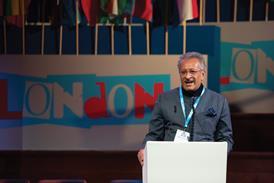
Giving ex tempore judgment on the rate charged by leading counsel for Nigeria, Mark Howard KC, the judge said the rate charged was ‘obviously substantially too high at £2,000’. Howard’s brief fee of £9m is to be dealt with at a costs hearing later this year, the court heard.
Howard, described by the Legal 500 as ‘probably the most authoritative and respected commercial silk at the bar’, is joint head of Brick Court Chambers.
The judge said: ‘The other thing to bear in mind, it seems to be clear… he is supported by Mishcon de Reya solicitors who send an email having him regarded as a super-silk.
‘There was no effective negotiation of that fee of £2,000.’
Read more
The judge expressed his concern at the lack of notes in relation to the firm’s search for alternative counsel, adding: ‘I would expect solicitors who are looking for trial counsel in 2021 to go to a range of chambers’. He noted that chambers clerks would give a range of counsel even if solicitors requested a particular barrister, as ‘it is just the way the bar works’.
It was ‘extraordinary’ that solicitors would not have kept notes of the rates of alternative counsel ‘because solicitors would want to make sure they had a note in case the client said of the person you recommended to us is too expensive, we might go for someone else’. He added: ‘They would have had a record of it. This is an important matter. These sorts of sums will be very important for a firm, even a substantial City firm like this. I have been very concerned about that.’
The judge ‘took some comfort’ from emails shared by Nigeria, but said he was left in the ‘position of having no doubt that the hourly rate being charged is unreasonable.
‘I have to ask myself what is the rate [that] would eventually come out if there was proper negotiation. I think those rates would come down…significantly it seems to me.
‘Counsel’s clerks are very sophisticated. They put forward a quote and if solicitors thought or decided the quote was not something they could negotiate, forgive me, they would be very naïve.’
He said the sum sought for Howard ‘affected the budget substantially’.
‘We are looking substantially at work pre-trial and in relation to Mr Carpenter’s [instructed for Nigeria] point, I am not assessing this as an hourly rate for trial. This is pre-trial applications, statutory important work. £825 is the right rate for this work balancing all [the] factors.’
The preliminary costs hearing continues.