
















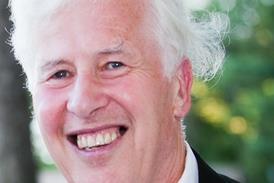







With the dust yet to settle on the surprise announcement that Nick Ephgrave has prematurely called time on his directorship at the Serious Fraud Office, questions and theories are now being bandied about what this all means.
Ephgrave’s rise to head the flagship prosecutorial agency back in 2023 did raise many an eyebrow, not only because he was the first non-lawyer to take the post, but also because he was relatively unknown. There were many Google searches undertaken on who he was and what his experience could bring to the table.
At the point of his appointment, I wrote about the challenges he would face, and whether his experience as a ‘law enforcer’ would be sufficient to steady what was a rolling ship through historically choppy waters, and if Ephgrave was the person to inject a new zeal into the SFO’s operations.
How has his record stacked up? It is obvious that the SFO has been a hive of activity over the last few years. Notwithstanding the legacy issues that Ephgrave inherited, a flurry of new investigations were opened, resulting, in part, in the SFO charging 23 defendants on 54 counts of fraud, bribery and corruption, and making 34 arrests. The dreaded ‘dawn raid’ also appeared to be back in vogue – there were more dawn raids during his brief tenure than there had been in the previous three combined.
Ephgrave’s emphasis on running ‘sharper, faster cases’ appeared to be working. His experience of delivering justice faster as a former police officer rang true. This has been demonstrated in the Axiom Ince prosecution, which kicked off a mere 15 months after the investigation was announced. This was previously unheard of. When investigations were normally announced, there would be a long pause before anything material resulted. One need only look at the saga that is the London Capital & Finance investigation, which commenced in 2019.
Relatively new approaches to investigations were also mooted, particularly the idea of paying whistleblowers in the UK for information that resulted in a conviction. Ephgrave cited the US model. At the time, he noted that nearly 90% of the $2.2bn in civil settlements and judgments recovered by the US Department of Justice was based on whistleblower information. The jury remains out on this proposal, which many lawyers have pointed out should be something the SFO approaches with extreme caution.
No one is under any doubt that the tone of some of the SFO’s work has pivoted, with relatively low-level domestic offending being targeted; not the blockbuster investigations we have known the agency to pursue.
The question that arises, therefore, centres on whether this is part of a broader playbook. Taking this further, will the talk of merging the SFO and the National Crime Agency resurface? There was much said about this approach during Theresa May’s time as home secretary, and while the noise has not been as loud, it has not fully disappeared. With the SFO’s work being slicker than it has been known to be in the past, will that volume dial be turned up – particularly given that this was all done when the ship was being steered by a former police officer, and not a heavyweight lawyer? Only time will tell, and the next permanent director may go a long way to answering that question.
Although the introduction of artificial intelligence may help address the longstanding issue, disclosure problems remain, as does the age-old concern of the SFO getting cases over the line.
Nevertheless, a recent seminar I did with Jason Williams, the head of the Fraud and Corruption Division at the SFO, gave audience members confidence that Ephgrave has put a team together that can continue to drive the achievements he has made over the past two years.
How this progress unfolds over the next director’s tenure will be closely monitored. However, one thing that does stand out with Ephgrave’s short tenure is that it has not been mired in controversy. There have been no toxic battles and no major public controversies. In fact, the number of firsts – from the SFO securing its first Unexplained Wealth Order, to returning £400,000 to victims of a fraud – may have defined Ephgrave’s term in office.
This was supported by the comments of attorney general Richard Hermer KC, who noted that Ephgrave ‘modernised the organisation’s approach to tackling serious fraud, bribery and corruption, strengthened its capabilities, and secured important convictions in complex economic crime cases’.
Iskander Fernandez is a partner and head of white-collar crime at Kennedys









No comments yet