























Climate-related disputes are increasingly raising mainstream commercial law issues, such as directors’ duties, corporate disclosures, shareholder actions and jurisdictional challenges. To date, much climate litigation has focused on future planning. While this remains the case, claims are also now emerging that seek to attribute liability to companies based on their historical knowledge.


Defences to legal claims that allege negligence or irrationality against individual companies and their directors will likely be framed as societal problems that require a wider solution to emerge from (as yet unformed) political consensus.
ICJ Advisory Opinion
On 23 July 2025, the International Court of Justice (ICJ) delivered its highly anticipated Advisory Opinion on the Obligations of States in respect of Climate Change. This anchors itself firmly to the science of climate change and the Paris Agreement’s collective temperature goal to limit global warming to 1.5°C. It has been described as a historic turning point in relation to climate justice and accountability.
The ICJ Advisory Opinion unanimously confirmed that:
(i) States have obligations – in accordance with their common but differentiated responsibilities and respective capabilities – to adopt measures to prevent, mitigate, and remedy climate harms;
(ii) States have a duty to cooperate with each other to meet their obligations; and
(iii) The breach of these obligations could result in consequences such as reparations (including restitution, compensation and/or satisfaction), guarantees of non-repetition and the cessation of wrongful acts.
A court in the Netherlands has already cited the ICJ Advisory Opinion. In January 2026, it ruled that the Dutch state was not taking sufficient measures to protect the inhabitants of Bonaire, a municipality of the Caribbean Netherlands. This small island has been identified by the Intergovernmental Panel on Climate Change (IPCC) as particularly vulnerable to the effects of climate change. The Netherlands has been ordered to put in place national emission targets for Bonaire within 18 months, and to draft and implement a national adaptation plan by 2030 that takes Bonaire into account.
How other states react to the ICJ Advisory Opinion will vary. But it is a reasonable working assumption that it will lead to similar challenges in other countries, requiring them to introduce mitigation and adaptation plans, including national emissions targets. This may affect companies operating in these jurisdictions that will have to comply with these plans and meet any targets that are subsequently imposed on them.
The ICJ Advisory Opinion may also make it more difficult for the UK to abandon or otherwise reduce its existing climate targets, including targets introduced by the Climate Change Act 2008 (as subsequently amended). That said, it is not safe to assume either that existing national legislation will remain in place or that new climate legislation will always work in favour of claimants. For example, in response to a tort claim, the New Zealand government is currently attempting to pass legislation to prevent companies from being sued for damage to the climate caused by their emissions.

IEA Net Zero plan 2021
In May 2021 the International Energy Agency (IEA), the world’s most prominent energy thinktank, published its Net Zero roadmap, which provided that no new oil and gas fields should be approved for development after 2021. The roadmap has made it more difficult for states, companies and financial institutions to justify approving investments in new oil and gas projects by reference to other IEA data and analysis. For example, Shell’s Energy Transition Strategy, published in 2024, makes limited references to the work and findings of the IEA. Instead, Shell justifies its climate strategy by reference to its own key beliefs which have been developed through its engagements with customers, policymakers, scientists and global thought leaders.
On 1 April 2026 a new claim was filed by Milieudefensie against Shell in the Netherlands. The claim refers to IPCC reports, the IEA and the ICJ Advisory Opinion. It:
(i) demands that Shell adopt a strategy based on the IEA’s NZE 2023 advanced-economies scenario – which requires those economies to reach net zero collectively by around 2045;
(ii) argues there is ‘no room’ within the remaining global carbon budget for the development of new oil and gas fields; and
(iii) argues that continued fossil fuel expansion risks creating a long-term ‘carbon lock-in’, delaying energy transition and undermining the goals of the Paris Agreement.
The substance of the claim alleges that Shell:
(i) has a stake in 700 new oil and gas fields worldwide for which a final investment decision has not yet been made; and
(ii) through political lobbying and public communication strategies, is influencing the demand side of the energy market and thus slowing down and obstructing the energy transition.
Frans Everts, president-director of Shell Netherlands, said: ‘Shell is helping to provide the energy the world needs today while investing in tomorrow’s energy, such as hydrogen, electric mobility and carbon capture and storage. We are confident in our legal position and committed to delivering a balanced energy transition – one that considers energy security, affordability, and sustainability.’
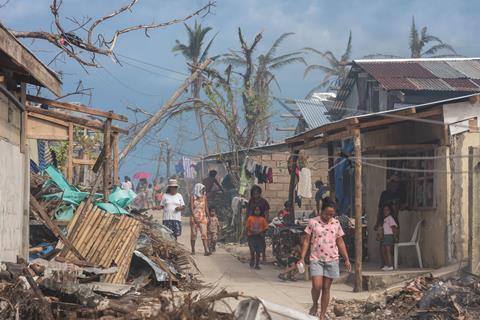
In December 2025, 67 claimants affected by Typhoon Odette, which hit the Philippines in 2021, filed a group action in the English High Court against Shell, seeking to hold it liable for physical and property damage and losses which the claimants argue were caused by Shell’s emissions. The claimants brought the claim under Philippine law. They allege that, although Shell has known about the dangers of climate change since the 1960s, through political lobbying and public communication strategies, it has sought to undermine the emerging scientific consensus on the causes and likely effects of climate change.
Shell reportedly denied that its production of oil and gas contributed to this individual typhoon. ‘This is a baseless claim, and it will not help tackle climate change or reduce emissions,’ said a Shell spokesperson.
Both these cases focus on lobbying activities and establishing what and when the oil and gas industry knew about climate change. This suggests an evolution in climate litigation strategy similar to the legal case theories used against tobacco companies. Much will likely turn on the evidence deployed, including the documents unearthed in the disclosure process and/or evidence provided by former employees (now whistleblowers).
Irrational planning
In 2024, Friends of the Earth and others successfully argued that Grant Shapps, then secretary of state for energy security and net zero, had acted irrationally (R (on the application of Friends of the Earth and others) Secretary of State for Energy Security and Net Zero [2024] EWHC 995 (Admin)). Shapps approved the UK’s climate plans required by the Climate Change Act 2008 without any provision for contingency planning. On the facts, this was not justified by the evidence, as Shapps should have known that all the UK’s planned climate policies and proposals would not be delivered in full. Some contingency planning would always be required.
This case is significant and interesting for three reasons:
(i) Public law claims of this type rarely succeed on irrationality grounds; it is a demanding legal test.
(ii) It highlights the fundamental problem that all climate planning must confront: government departments receive an increasingly limited share of already stretched national fiscal budgets. At the most basic level, the current system cannot process climate risk. This funding shortage produces irrational behaviour by public decision-makers.
(iii) Although this is a public law case, the failure to plan on a contingency basis could perhaps be extended by analogy to the duties owed by directors of private companies. Companies and their directors that fail to plan on a contingency basis and decide to place all their eggs in one fossil fuel basket could perhaps find themselves exposed on this basis.
Bank of England requires climate plans
On 5 December 2025, the Bank of England, in its capacity as the Prudential Regulation Authority (PRA), published new climate guidance for banks and insurers (PRA Guidance). The PRA Guidance recognises that climate-related risks have three characteristics that present unique challenges: the risks are systemic; foreseeable but uncertain in scale and timing; and the size and distribution of future risks are likely to be affected by taking action now. The PRA Guidance is designed to help banks and insurers strengthen their climate risk assessment and make informed strategic decisions that support their business interests. The PRA expected firms to have carried out an internal review by 3 June 2026 and identify any areas that require further work with a view to developing a plan to address any gaps.
Litigation remedies
Quantifying damages in climate litigation cases will always be challenging. How can you express, in financial terms, the probability that an irreversible tipping point in the planet’s climate system will be crossed? It is a legal balancing act without a tangible fulcrum.
While recent cases in the Netherlands and Germany imply that some form of remedy may be available in the future, judges will likely always be wary about being drawn into complex policy decisions as to how future climate targets are set, both for industry sectors and individual companies. To the extent that they are persuaded to do this, claimants may argue that a negative injunction containing an absolute prohibition on certain activities is justified on the facts and offers a simpler, safer and more appropriate method of granting relief against companies and their directors.
Conclusion
Not all climate cases will succeed. But an increasing sense of desperation and frustration with the status quo means that they are unlikely to disappear. Although not ideal, the zero-sum outcome of legal cases can nevertheless drive stakeholders towards a common purpose, including providing companies with adequate financial incentives to mitigate climate risks. English courts continue to be friendly forums for these actions and disputes lawyers would be wise to monitor outcomes on a regular basis.
Sukhi Kaler is a partner and Tim Malloch a senior associate at Michelman Robinson, London








No comments yet