






















The Gazette’s courts editor was invited to shadow magistrates over several days. This is what she found

Magistrates’ courts already deal with 92% of all cases before the criminal courts. The increase in sentencing powers proposed in the Courts and Tribunals Bill will push that figure even higher. With this in mind, the Gazette wanted to find out more about the magistracy and, in a first, according to the Magistrates’ Association, we were invited to shadow two magistrates over several days and interview the presiding justices.
Sarah Clarke has been a magistrate since 2004. She sits as a presiding justice in both adult and youth courts and is the Magistrates’ Association’s deputy national chair.
I shadowed Clarke over two days. The first was in a high-ceilinged courtroom complete with a large skylight. The court is normally used as a youth court but was repurposed as a magistrates’ court on this sunny day, as the lists are busy with all courtrooms running and there are no youth cases at Milton Keynes that day. My second day shadowing is in an identical court, the only difference being that, instead of a nest of tables in the middle, the usual benches are in their normal place. Everything is clean, modern and seems to be working efficiently.
After a full morning dealing with cases ranging from applications for stalking prevention orders to assault by beating plea hearings, Clarke sits down with me over lunch – bought at the court’s cafe – to talk in a large training room.
'The Courts and Tribunals Bill is going to be a big challenge, but some fundamental change is needed if the backlogs can be addressed'
Sarah Clarke, deputy national chair, Magistrates’ Association
Clarke, who runs her own business, was inspired to join the magistracy thanks to her aunt. ‘It seemed quite an interesting thing to do,’ she said. ‘I applied when my son started primary school.’
Looking for something to ‘stretch me intellectually’ and with a professional background in research, psychology and counselling courses, the magistracy, which ‘combined the two’, seemed a good fit: ‘I’ve always been involved in the community, and with people and language. I thought it would be a challenge [to be a magistrate]. It was something I could fit around other things.’
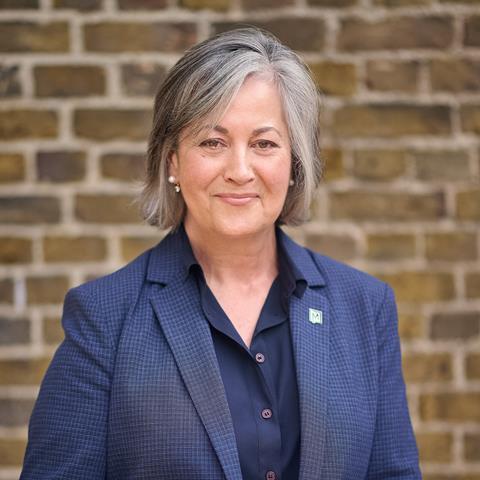
The Courts and Tribunals Bill will enact some of the biggest changes the magistracy has faced. Clarke says she is sure the volunteers are up for the challenge. ‘Whatever the outcome [of the upcoming bill], they will rise to that. It is going to be a big challenge, but some fundamental change is needed if the backlogs can be addressed.’
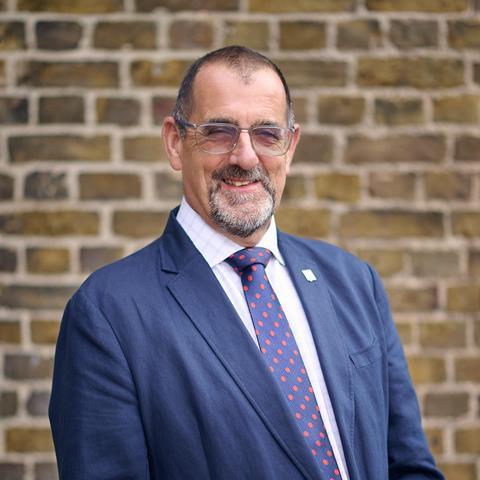
David Ford, a magistrate since 1994 and national chair of the Magistrates’ Association, was also inspired by a family member. His grandfather was a magistrate at Cardiff Magistrates’ Court, where Ford now sits, though they never sat together. Over sandwiches from the court cafe, Ford asks me if the food is better at Milton Keynes. (I liked the sandwiches at both).
Ford has spent the morning in a rather nice courtroom with the largest public gallery I have ever come across. In it, an aspiring magistrate joins the parade of family members and friends supporting individuals appearing before the court. Once the cases on the list are dealt with, Ford offers to answer any questions the aspiring magistrate may have but is politely turned down.
Ford also takes me to a large training room. It feels slightly bigger and brighter than the one at Milton Keynes, which is impressive considering it is borrowing natural light from a corridor that looks out onto a courtyard. The building feels well-configured. Ford gives me a quick tour and I sneak a peek at a deliberating room. It is small and comfortable, but otherwise unremarkable. The grandeur the general public may conjure when they think about courts and justice is not present in this modern, simple place.
‘I was a typical teenager,’ Ford said. ‘And [my grandfather said] “I think it will be a good idea”, so I went to see him. For four hours he talked to me about the commitment needed. I thought it was time to give back. I never thought I would stay so long. It is very fulfilling. I’ve always enjoyed working under a certain amount of pressure. You genuinely feel like you are making a contribution; you feel as if you are doing something.’
Wide variety of cases
During the days I shadowed Clarke and Ford, they heard a variety of cases with defendants ranging from 18-year-old carers to 71-year-old widowers, as well as those who had no idea they had been penalised (through the single justice procedure) and were now appearing in court to argue against their conviction. Ushers provide tissues to those whose emotions lead to tears.
The government’s proposed changes will require more volunteers to take on this work. This year, the government has pushed recruitment, speeding up the process significantly. More than 1,600 magistrates were appointed in 2025/26, with 655 recruits added in the first quarter. This means an additional 2,312 magistrates. The net increase, however, is ‘just over 600’, according to the Magistrates’ Association. At the current rate of recruitment, the association says, it will take 9.2 years to reach the government’s 21,000 target.
'We have got more opportunity to see more cases and more types of cases with longer sentencing powers. We can help the Crown court backlog'
David Ford, national chair, Magistrates’ Association
After years of decline, the increase is still a figure worth celebrating, Clarke tells me.
Ford says the bill looks set to create a ‘massive opportunity’ along with ‘massive frustration’.
‘The worry people have is where the work is going to be,’ he says. The increase in magistrate numbers must be accompanied by wider change. ‘We have got more opportunity to see more cases [and] more types of cases with longer sentencing powers. We can help the Crown court backlog. We also know if we deal with the backlog, the remand list is going to get bigger.’
It is not only new magistrates that need to be recruited. Although magistrates make the final decision, the lay bench is always assisted by a legal adviser.
Ford points out that legal advisers are retiring, quitting or moving to roles which pay more. It is a drain that will need to be plugged.
With a boost needed to magistracy numbers, who should consider volunteering? Those with a ‘belief in the fairness of the system’, Clarke says. ‘You want to be part of something that you hope is making a meaningful difference. There is a sense of purpose of being part of the community and doing something for the benefit of yourself and others.’
Ford agrees: ‘The feeling of self-worth you get from contributing, without a question of a doubt [is the best thing about being a magistrate]. It is a commitment [but] anybody can do it.
‘Being able to cope with the responsibility and upset [when dealing with hard cases or vulnerable defendants] is important. It is hard. We do not make the law up; we follow the system, we follow the guidelines, but it can be difficult and you must learn to not take it home with you,’ Ford says. ‘We do get trained and the support is there.’
Becoming a magistrate involves an application, court visits, assessment, and interview. Previously, the application was notoriously long-winded and slow-moving. It has been improved. From application to sitting can take about 12 months. There is hope that this can be shortened further.
Those who pass the application begin training through the Judicial College. Training includes sitting in court as an observer and sitting days with a mentor. New magistrates sit with their mentor for up to 18 months before undergoing consolidation training and, eventually, being signed off. Magistrates undergo regular training throughout their magistracy.
Clarke and Ford are clearly passionate, but things are not always easy. Safety, onerous procedures for claiming expenses and lack of recognition are all issues.
Clarke admits there have been occasions in which she has had safety concerns, but ‘it does not happen very often because I have a certain familiarity with the courts’.
While on the bench, Clarke communicates clearly with defendants, explains what is happening and why, and checks they understand what is going on.
She says: ‘It is about being mindful. We have done recent training on spotting behaviours. We need to be aware of things straight away. I sometimes acknowledge a long wait to try and de-escalate any feelings.’
Ford, who greets every defendant who comes into his court with a ‘good morning’ or ‘good afternoon’, says: ‘We have to be fair and consistent with everyone. I always welcome people and we must show them respect. The standards [with a represented or unrepresented person] should be the same.’
Change needed now
It is easy to forget that magistrates are volunteers. Like our juries, we place our trust in members of the community and the justice system relies heavily on their work. Scrutiny of the magistracy will grow if the bill is enacted. A heavier reliance on magistrates will have to mean more legal advisers, a better-funded probation and legal aid service, and better public understanding and awareness of magistrates.
I was told that a great deal is happening behind the scenes to ensure as much as possible is done if changes do go ahead. Recruitment and retention of magistrates, and those who help them, is fundamental to ensure the proposed changes do not overburden our crucial frontline.
This article is now closed for comment.













2 Readers' comments