






















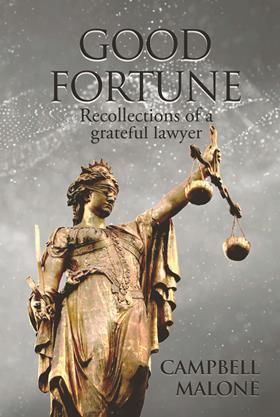
Good Fortune: Recollections of a Grateful Lawyer
Campbell Malone
£19.95, Staten House
★★★★✩
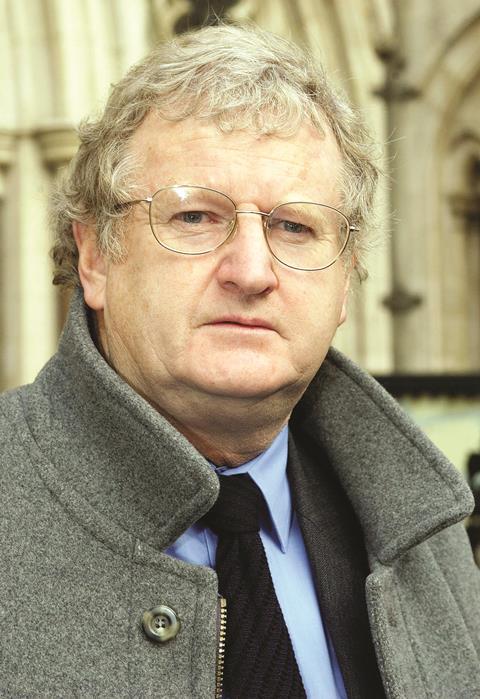
There are few literary genres that I enjoy less than lawyers’ memoirs. However, for Campbell Malone’s I will happily make an exception. Now retired, the solicitor pursued the niche practice of criminal appeals, championing miscarriages of justice over a 40-year career. He did this in the face of growing conservatism at the Court of Appeal, an increasingly hopeless watchdog body (the Criminal Cases Review Commission or CCRC) and the death throes of legal aid. He was the pre-eminent appeal lawyer of his generation (as the CCRC put it), the founder of the Criminal Appeals Lawyers Association – and is much missed.
This book is not the usual self-serving rewriting of history. Our hero is self-effacing, to an almost comical degree. ‘I have not had an especially successful career,’ he writes in the introduction.
Well, that depends on how you define ‘success’. This solicitor specialised in fighting for the most marginalised of underdogs in the most unwinnable of cases. Clients included Stefan Kiszko, Kevin Callan, Eddie Gilfoyle, Susan May, ‘shaken baby’ cases such as Lorraine Harris and Suzanne Holdsworth, and Andrew Malkinson.
The book begins with happy recollections of life in the north-west’s ‘first radical law firm’, the wonderfully eccentric Casson & Co. Malone cheerfully paints his extraordinary career as a series of happy accidents. ‘I went into the profession with my eyes firmly closed,’ he says. There is a stark contrast between amusing anecdotes of life at the sharp end of legal practice in Salford, and then in his beloved Todmorden, and the devastation wreaked upon the lives of the clients that he represented.
For all its faults, the book (self-published; it would have benefited from a proofread) is an important record of a troubling period in our justice system’s history. Malone describes how our courts were shamed into acknowledging and correcting errors in the wake of a run of scandals, notably the ‘Irish’ cases, the Cardiff Three, as well as his own client Kiszko, wrongly convicted of the rape and murder of an 11-year-old girl.
Public outrage led to a royal commission and, ultimately, the establishment of the CCRC. Malone talks of a ‘honeymoon’ period after the watchdog was set up in 1997. This was short-lived. Malone had enough experience of the CCRC’s dismal predecessor body – the shadowy C3 unit at the Home Office – to make him a fair critic of the commission. He makes clear his respect for the organisation despite it being ‘conservative’ and ‘overcautious’. He also recognises that ‘things were clearly beginning to go badly wrong by the time I had retired’ in 2010.
The CCRC is now in crisis over multiple failings in the Malkinson case, which led to both the chair and chief executive exiting last year. Malone submitted an application on behalf of Malkinson to the CCRC in 2009 and had ‘every reason to believe it had a more than reasonable chance of being successful’. Instead, it was rejected not once but twice before a final successful referral in 2023.
Of another high-profile client, Eddie Gilfoyle, Malone writes straightforwardly that not only was he wrongly convicted ‘but no crime took place’. Gilfoyle was convicted of the murder of his eight-and-a-half-month- pregnant wife in 1993. He calls the prosecution’s case that Gilfoyle somehow faked her suicide ‘incomprehensible’. In 2017, the watchdog shut down Gilfoyle’s last chance to clear his name – there had been two failed appeals, one a referral from the commission itself.
It is wrong to talk about ‘successes’ and ‘failures’ when so many of the ‘successes’ die so soon after their release. Kiszko never recovered from his 16 years in prison and died 22 months after his release. Malone managed to get hold of his prison records, including a report from a prison psychiatrist who said the vulnerable Kiszko suffered from ‘delusions of innocence’.
Jon Robins is a lecturer in criminology at Brighton University and director of the Future Justice Project. He is joint secretary of the All-Party Parliamentary Group on Miscarriages of Justice









No comments yet