





















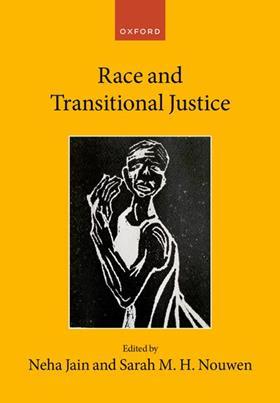
Race and Transitional Justice
Editors: Neha Jain and Sarah M. H. Nouwen
£105, Oxford University Press
★★★★✩
Transitional justice emerged after the end of the second world war. As recognised by the United Nations secretary-general in 2004, it encompasses ‘the full range of processes and mechanisms associated with a society’s attempts to come to terms with a legacy of large-scale past abuses, in order to ensure accountability, serve justice and achieve reconciliation’. Such processes usually follow a period of political change.
Usually, when one political system commits human rights abuses or war crimes, it is very difficult to hold the perpetrators accountable until the group’s political control is brought to an end. Once the ‘regime’ is replaced by another political system, transitional justice allows for these acts to be recognised and corrected through different methods.
One common method is criminal trials (such as at Nuremberg). More recent examples are the international criminal tribunals for the former Yugoslavia and for Rwanda, which prosecuted individuals for war crimes, crimes against humanity and genocide.
However, criminal trials may not be the most suitable transitional justice process. There are competing goals within transitional justice; for example, balancing justice and retribution with reconciliation and peace building. This was demonstrated through the South African Truth and Reconciliation Commission, which granted amnesty (immunity) to perpetrators in exchange for their full testimony. The commission was more focused on building a complete truth about the acts which took place during the apartheid regime for the purpose of promoting national reconciliation.
Race and Transitional Justice convincingly makes the argument that race and racism have been overlooked and ignored during transitional processes throughout history. This may seem counterintuitive, as many wrongs and atrocities have been racially motivated, for example apartheid, or the conflict in the former Yugoslavia.
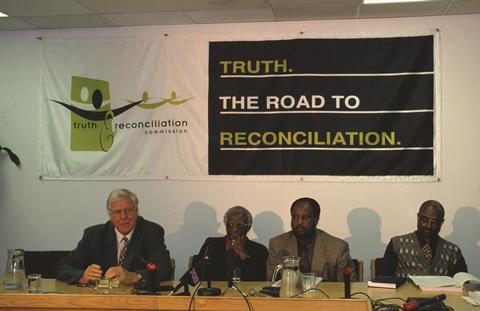
The South African Truth and Reconciliation Commission narrowed the interpretation of its mandate, so that ‘a victim of any race who was tortured for political reasons could qualify as a victim’. This resulted in the commission viewing the wider, systemic policies of the apartheid regime as background information to the more individual acts it heard, rather than assessing the impact those policies had on minority groups. For example, the Group Areas Act – which forcibly relocated millions of black South Africans – led to victims, who were not individually targeted for political reasons but suffered harm as a result of being a member of a specific racial group, not being categorised as victims by the commission. It is this structural, systematic racism which the authors argue is being overlooked within transitional justice processes.
The book advances different proposals regarding how the future of transitional justice may be designed to resolve these issues.
Michael Smith is a fourth-year law (study abroad) LLB (Hons) student at Lancaster University






No comments yet