






















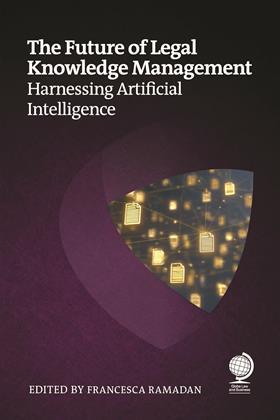
The Future of Legal Knowledge Management: Harnessing Artificial Intelligence
Editor: Francesca Ramadan
£99, Globe Law and Business
★★★★✩
It is trite to say that generative AI has the potential to transform the practice of law. Nevertheless, there remains speculation about what that transformation will look like, so this is a timely publication. It is also accessibly broad, offering chapters on decision intelligence – deciding what information should feed any AI model, an indubitably human pursuit as things stand – data management, generating organisational support for new ways of working and the critical role of the knowledge manager.
Arguably, training, development and precedent management have been overlooked by firms of all sizes. Important, but an afterthought. This can no longer be the case. Professional support lawyers, knowledge management teams and data personnel are now central to the firm’s performance (certainly, data/knowledge leaders are being recognised in partnerships). Data collected on work done, clients won and lost, documents produced and revised must all be of the highest quality in order for there to be any advantage in the firm producing or feeding a large language model based on its work.
Further, communication between members of a firm becomes more important, not less so. In order to utilise tacit knowledge in this context – the knowledge and experience in people’s heads – it must be captured. The knowledge management professional becomes an ‘architect’ of the necessary framework, finding material, cleaning it, labelling it and ensuring cross-reference is made not just to owners but to those who really understand the subject matter. This is acknowledged to be ‘unglamorous’ – the creation of taxonomies and subsequent labelling is not, yet, the brave new world of put-your-feet-up efficiencies. Indeed, will such a time ever come, given the need to update models and, crucially, to retain understanding of the underlying material?
Still, it is indisputable that this powerful tool will change the way we work. Testing ideas via AI (acting as a ‘thought partner’, in the book’s terms), is something most of us already do; the opportunity to sidestep fear of the blank page.
What about AI mentors for junior lawyers, providing bespoke assistance where there is a weak grasp of an area of practice? Although one can see the potential in such an approach, guardrails would have to be sufficient to prevent the uninformed from taking ‘AI slop’ as gospel.
As the profession continues to navigate this brave new world, books such as this one provoke the right questions.
Tom Proverbs-Garbett, director of TrustPoint Governance, is the author of Being a Trainee Solicitor: How to Survive and Thrive









No comments yet