



















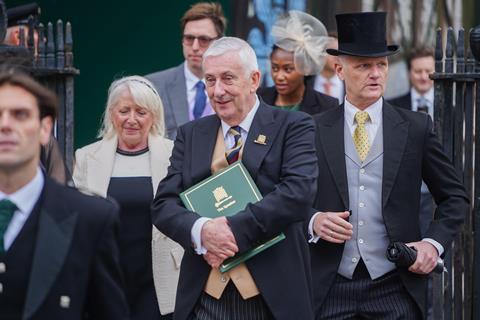
In a rare constitutional challenge, the House of Commons speaker has asked the High Court to throw out a claim brought by the Charity Commission against the parliamentary ombudsman. Lawyers for Sir Lindsay Hoyle MP (pictured) told Mr Justice Fordham last week that the commission should not be granted permission to seek judicial review because its claim was both academic and in breach of parliamentary privilege.

Fordham reserved judgment on the permission application. At its heart are two separate complaints to the commission, each going back more than six years.
In the first, Damian Murray, 67, complained about sexual abuse at a Roman Catholic college he had attended in Blackburn in the 1970s – though Murray was never sexually assaulted himself.
In the second, Lara Hall, 37, complained that she had been sexually exploited by a trustee at a charity where she was a volunteer as well as a beneficiary. Both complainants have waived their right to anonymity, although a court order protected their identities until the hearing last week.
Neither complainant was satisfied with the commission’s response. Murray thought his concerns had not been dealt with and felt the commission had not recognised his personal situation. Hall said the commission had failed to carry out a proper investigation and failed to consider her welfare, given her vulnerabilities.
The Charity Commission describes itself as a ‘risk-led’ regulator that prioritises current and future risk over the investigation of past wrongdoing. It regards its role in assessing safeguarding issues as limited. Even so, it now accepts that it could have handled these complaints better.
Murray and Hall decided, independently, to complain to the ombudsman through their MPs. Readers with long memories will recall that legislation passed in 1967 created a parliamentary commissioner for administration, with power to investigate ‘maladministration’ by government departments and specified public bodies – including the Charity Commission.
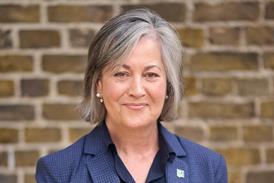
A health service commissioner was created by parliament in 1993 and the two posts are held by the same person, Paula Sussex CBE. Her office is now referred to as the parliamentary and health service ombudsman, although the High Court case is concerned only with the 1967 legislation.
Complaints by Murray and Hall were upheld by the then ombudsman in March 2024. In each case, the Charity Commission apologised to the complainants and paid them compensation.
But the ombudsman decided that the injustices caused to them had not been remedied. She proposed laying before parliament what are called special reports on the two cases, using her statutory powers. The commission objected, arguing that the ombudsman had exceeded her jurisdiction, and issued legal proceedings against her last May.
The ombudsman’s link to parliament is through the Commons public administration and constitutional affairs committee. Simon Hoare MP, its chair, told MPs last September that the Charity Commission was ‘bringing legal proceedings deliberately to prevent the laying of two reports’. In an unprecedented move, MPs agreed to bypass the court challenge to the ombudsman’s statutory powers by ordering her reports to be laid before the Commons.
They also decided that the committee of privileges should examine allegations that the commission had ‘acted perversely in bringing legal proceedings that would prevent the laying of the reports’.
Last November, the privileges committee took evidence. Saira Salimi, counsel to the Commons speaker, said that the decision by MPs to lay the reports before parliament was ‘unquestionably protected by parliamentary privilege’. What the court was being asked to review was a challenge to the ombudsman’s ‘separable’ statutory powers.
Salimi thought it would be better if the High Court allowed the Commons procedures to ‘work their way through’ before the issues were considered judicially. ‘This is an unusual case where parliament and the courts are on the same territory at the same time,’ she said.
Karl Banister, from the ombudsman’s office, argued that the High Court case was now ‘academic’ because the reports had been published by parliament.
Witnesses from the Charity Commission explained they were seeking a definitive answer from the courts about their jurisdiction. They said ‘the ombudsman cannot retake regulatory decisions made by the commission to force a different conclusion, replacing our judgement with its own’.
Formally, the Charity Commission is challenging the ombudsman’s decision-making, as set out in the special reports she had planned to lay before parliament. But counsel to the Commons speaker told the High Court in written submissions that the issue had become ‘entirely academic’ when MPs ordered the two reports to be laid. It was also ‘non-justiciable due to parliamentary privilege’, the speaker argued. The ombudsman agreed that ‘the claim impermissibly seeks to impeach or question proceedings in parliament’.
But as the Charity Commission sees it, the case is about a regulator that finds a would-be super-regulator breathing down its neck and telling it what to do. Solicitors will be familiar with the concept.
joshua@rozenberg.net









3 Readers' comments