







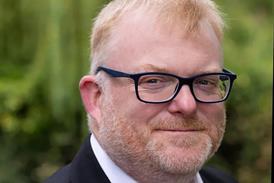















At the Costs Law Reports Conference last month, things took an unexpectedly philosophical turn during a fascinating talk by Simon Davis (pictured). The former Law Society president and commercial litigation stalwart was discussing what makes legal costs good or bad.

Davis, expressing his personal views, recalled a panel discussion at St Paul’s Cathedral, ‘Money: good or bad?’. It reached some interesting conclusions. ‘Bad money in’ is cash earned at others’ expense – stealing their ideas or exploiting them. ‘Good money in’ comes from entrepreneurial spirits, placing their own capital at risk and creating employment for others. It gets more interesting in the ‘out’ side of the equation. ‘Bad money out’ is that which is squirrelled away and gloated over. ‘Good money out’ is spent, buying other people’s products and services, living it large and generally breathing economic life into the system.
In Davis’s view, the ‘good’ and ‘bad’ labels can also be attached to legal costs. Some are good; some are bad; and unless solicitors focus relentlessly on promoting the good and punishing the bad, they risk imperilling the very costs regime itself.
So what are examples of good and bad fees? Good costs, predictably, involve a solicitor understanding at the outset what the client wants to achieve, what work needs to be done, and producing early, transparent, healthy cost estimates that are consistently updated.

The old maxim that costs estimation is an art, not a science, with too many twists and turns in litigation to make meaningful predictions of how much it will cost, does not cut it in an era of artificial intelligence. True enough, even the most experienced litigator may be surprised in a hard-fought dispute. However, a combination of AI capability and years of data on previous cases means lawyers should now be better prepared. At the touch of a button, it is perfectly possible to say to a client, ‘based on our analysis of data, these are the costs we are likely to incur; and if the case goes this way or that way, this will be the costs impact’. AI means ‘good costs’ between solicitor and client are now more achievable than ever.
What about ‘bad costs’? These will often arise in situations where the solicitor is not necessarily behaving badly. Regulatory or criminal investigations, for example, can happen incredibly quickly – the client’s business has been shut down, you gather a team and rush round, collect evidence and instruct counsel. Before you have even blinked, a huge figure looms on the clock. But the truth is lawyers are often rather uncomfortable about billing. So in the heat of the action, you squirm at the thought of sending out a detailed costs estimate and asking for payment. Failing to do so, however, is merely storing up trouble for later – and the speed with which an estimate can now be created means there is no real excuse for not providing one.
More bad costs are generated where one highly resourced party incurs costs to soak up their opponent’s resources and force them to capitulate or settle on poor terms.
Then you have entrenched disputes in which each side detests the other. It takes a strong solicitor not to find themselves riding the wave of the client’s powerful emotion, or even more dangerously, their sense of principle. Bad costs can be incurred where a client ignores the legal and factual obstacles in the way of the case, or where their feelings are so strong that they refuse to even contemplate the possibility of a deal. In these situations, it is all the more important for a solicitor to stick to the good costs principles of ensuring all work is truly necessary, with clear and detailed estimates.
Of course, where one party refuses reasonable settlement offers, then costs sanctions may apply – and this can in fact be a healthy aspect of the justice system. Davis is a trustee of the Access to Justice Foundation, which has received £750,000 in pro bono costs awards since June 2025. This money has supported advice agencies around the country. As Davis pointed out, a better example of ‘good costs’ is hard to imagine.
Rachel Rothwell is editor of Gazette sister magazine Litigation Funding








No comments yet