






















Few features of the British constitution command as much quiet respect as trial by jury. It is not merely a legal mechanism, nor simply a tradition preserved for its own sake. It is a living expression of a constitutional principle.
When the state accuses a citizen of a serious crime, guilt must be established not only before officials of the state, but before ordinary members of the public.
That principle deserves careful consideration in the debate now unfolding around the Courts and Tribunals Bill. Amongst its provisions are proposals that would, in certain circumstances, limit the availability of jury trials in order to address the severe backlog within the criminal justice system.
No responsible parliamentarian should deny the scale of that challenge. Victims are waiting too long for justice. Defendants are waiting too long for their cases to be resolved. Confidence in the system is inevitably strained when delay becomes the norm rather than the exception.
However, acknowledging the problem does not absolve us of the responsibility to ensure that the solutions we adopt are the right ones.
Before entering parliament, I practised as a barrister. Whilst I was not a criminal practitioner, I did appear in the Coronial Courts, where juries still sit in certain inquests. Through that experience I saw first-hand how seriously jurors approach their task: listening carefully to the evidence, reflecting on the arguments presented to them, and appreciating the gravity of the conclusions they are being asked to reach.
It is a powerful reminder that justice in this country is not administered solely by the state, but with the participation of the public.
Read more
For that reason, proposals to curtail jury trial cannot be regarded simply as matters of efficiency or case management. When the state reduces the circumstances in which it must persuade twelve citizens before securing a conviction, it fundamentally alters the balance between the individual and the power of the state.
Those who propose such a change therefore carry a significant burden. They must demonstrate not only that reform is necessary, but that the particular reform proposed will genuinely address the problem it seeks to solve.
At present, that case has not yet been made.
The government has placed considerable reliance on the recent review conducted by Sir Brian Leveson. Sir Brian is a jurist of immense experience and his work deserves careful attention. However, a review, even one conducted with great care and expertise, cannot substitute for the broader evidential base that a reform of this constitutional significance requires.
In particular, there is a striking absence of clear modelling demonstrating that limiting jury trials will materially reduce delays.
In response to a question in the House of Commons on 3 February this year, the lord chancellor indicated that the government would publish modelling supporting the assumption that these proposals would reduce trial times by around 20%. Yet the impact assessment accompanying the legislation contains no such modelling. Instead, it adopts Sir Brian’s analysis as the basis for its projections.
Analysis is valuable, but analysis is not modelling. When parliament is being asked to scale back a centuries-old safeguard, it is reasonable to expect robust evidence showing that doing so will deliver the promised benefits.
Moreover, the causes of delay in the criminal justice system are neither obscure nor controversial.
The first is judicial capacity. Courts cannot hear cases without judges, yet judicial sitting days have for years been tightly constrained. Courtrooms sometimes sit unused not because juries are unavailable, but because there is no judge available to preside.
The second is the state of the court estate. Across the country many criminal courts operate in buildings that are outdated and poorly equipped. Trials are frequently disrupted by unreliable technology and inadequate facilities. These are not problems created by jury trial, and they cannot be solved by limiting it.
Thirdly, there are continuing operational problems with prisoner transport and custody arrangements. It is now far from unusual for proceedings to be disrupted because defendants arrive late, or occasionally not at all. Juries are left waiting, witnesses are sent home, and valuable court time is lost.
Finally, there is the growing strain on the criminal bar. The system increasingly struggles to secure suitably experienced advocates to prosecute and defend serious cases. Delays arise not from inefficiency but from the gradual erosion of the professional capacity on which the system depends.
Taken together, these factors suggest the backlog is primarily a problem of capacity. In that context, curtailing jury trials risks treating the symptom rather than the cause.
There are also questions about the practical implications of the proposals themselves. Sir Brian Leveson envisaged alternative tribunals including lay magistrates as 'wing members', preserving an element of public participation. The government’s proposals do not adopt that aspect of his recommendation. At a time when magistrate recruitment itself presents challenges, it is legitimate to ask how the system will absorb the additional caseload these reforms envisage.
Trial by jury has endured for centuries not simply because it is ancient, but because it commands public trust. It ensures that the immense coercive power of the criminal law is exercised not only by the state, but with the participation and consent of the community.
If we are to change that balance, we must be confident that the change will genuinely strengthen the justice system rather than merely rearrange its pressures.
Efficiency is essential in any modern justice system. However, efficiency must never come at the expense of the constitutional principles that give that system its legitimacy.
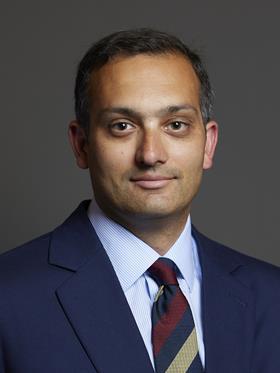
Dr Neil Shastri-Hurst MP is the Conservative Member of Parliament for Solihull West & Shirley, elected in 2024. He previously served as a British Army Medical Officer and barrister, and sits on the House of Commons Justice Committee









3 Readers' comments