




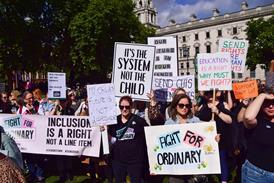


















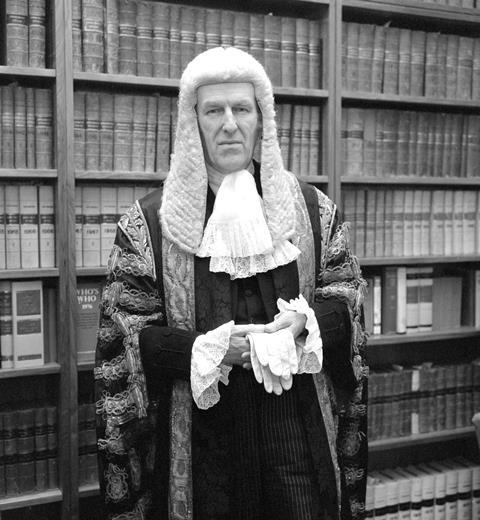
The saying ‘Fair’s fair’ refers to the instinctive sense that acting fairly is what everyone should do, even if they don’t. However, local authorities and other public bodies have a duty to act fairly following the principles of natural justice. These are that no one is to be a judge in their own cause (nemo iudex in causa sua) and that the parties must have a fair opportunity of presenting their views on the matters in issue (audi alteram partem – hear the other side). But as Lord Bridge (pictured) observed in Lloyd v McMahon [1987] AC 625: ‘The so-called rules of natural justice are not engraved on tablets of stone. To use the phrase which better expresses the underlying concept, what the requirements of fairness demand when any body, domestic, administrative or judicial, has to make a decision which will affect the rights of individuals, depends on the character of the decision-making body, the kind of decision it has to make and the statutory or other framework in which it operates. In particular, it is well-established that when a statute has conferred on any body the power to make decisions affecting individuals, the courts will not only require the procedure prescribed by the statute to be followed, but will readily imply so much and no more to be introduced by way of additional procedural safeguards as will ensure the attainment of fairness.’

Local authorities, as statutory bodies, regularly make decisions affecting individuals and must therefore always be mindful of their duty to act fairly (see, for example, R (on the application of Moseley) v Haringey London Borough Council [2014] UKSC 56, where the Supreme Court found the council’s consultation on its council tax reduction scheme to have been unfair).
The Judicial Committee of the Privy Council (JCPC) is the final appellate court of Trinidad and Tobago, which became a republic within the Commonwealth in 1976. On 30 October 2025, Lady Rose and Lady Simler, with Lords Sales, Leggatt and Clark, issued an interesting JCPC decision on a judicial review concerning natural justice. This was R (John Calder Hart) v Chin (Trinidad and Tobago) [2025] UKPC 51. The court also provided, at paragraph 32, a valuable summary of the key elements of natural justice and procedural fairness.
The appeal arose from a Commission of Enquiry (the commission) report following a public enquiry in Trinidad and Tobago about a house-building project set up by a state-owned enterprise – the Urban Development Corporation of Trinidad and Tobago. Serious problems arose with the project, causing substantial public costs. These included site unsuitability for the construction of multi-storey apartment blocks, resulting in structural distress and the eventual demolition of two buildings. The commission’s report contained adverse comments and findings about John Calder Hart (the respondent), who had been the chairman of the state-owned enterprise.
Hart sought judicial review since (among other things) the commission had provided him with no notice of adverse findings or criticism and he was given no opportunity to be heard or to respond to the commission’s findings. Section 20 of Trinidad and Tobago’s Judicial Review Act 2000 provides that: ‘An inferior court, tribunal, public body, public authority or a person acting in the exercise of a public duty or function in accordance with any law shall exercise that duty or perform that function in accordance with the principles of natural justice or in a fair manner.’ Although at first instance, Harris J dismissed the application for judicial review, the Court of Appeal held that Hart was entitled as a matter of natural justice and procedural fairness to be given notice of the adverse criticisms before publication of the report. It also quashed the commission’s decisions. Dr Myron Wing-Sang Chin, one of the commissioners, appealed to the Privy Council, challenging the Court of Appeal’s decision.
At paragraph 32, the court summarised key elements of the law on when a person should receive prior notice of adverse comments or findings as a matter of natural justice and procedural fairness. Local government lawyers will wish to study these closely, including the authorities mentioned. Space forbids other than headline mention of the principles as follows: the standards of fairness are neither immutable nor are they to be applied identically in every situation; fairness in any given case depends crucially upon the particular facts and circumstances; fairness will often require that a person potentially affected adversely will have an opportunity to make representations after being informed of the gist of the case s(he) must answer; while cases may arise in which it can properly be held that denying the subject of a decision an adequate opportunity to put his case is not in all circumstances unfair, that will rarely occur; the more final the conclusions and their force, the more the process needs to be assuredly fair; and breach of fairness is serious even if lacking practical consequences.
The JCPC had no doubt that the commission’s report contained a number of serious criticisms, adverse comments and findings about Hart. These were final conclusions, strongly expressed. In the circumstances, the court considered that natural justice and fairness required Hart to have been given notice and allowed the opportunity to respond. The appellant provided no satisfactory basis to show that the commission’s conduct in failing to do so was fair. Consequently, the JCPC was satisfied that the commission did not comply with the law on natural justice and fairness required Hart to have been given notice and allowed the opportunity to respond. The appellant provided no satisfactory basis to show that the commission’s conduct in failing to do so was fair. Consequently, the JCPC was satisfied that the commission did not comply with the law on natural justice and fairness (now embodied in section 20 of the 2000 act) and dismissed Dr Chin’s appeal.
Nicholas Dobson writes on local government, public law and governance









No comments yet