





















A businessman described as the ‘architect and originator’ of a plot to plant a fake bomb outside a barristers' chambers has lost an appeal against his conviction and sentence.
Following a hearing on Thursday, the Court of Appeal returned this morning to reject Jonathan Nuttall’s appeal against his conviction in 2023.
In lead judgment, Lord Justice Edis described the conspiracy as ‘an attack on the system of justice itself’ and said Nuttall’s sentence of eight years and two months was ‘not one day too long’.
‘This was as serious an offence of planting hoax devices as could be imagined,’ he added.
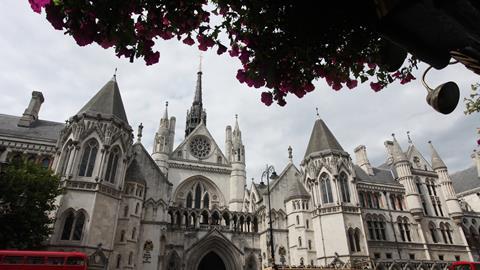
The court heard that devices designed to resemble explosives were planted at Gray’s Inn in 2021. The incident caused building evacuations and road closures while the devices were checked. Police quickly arrested Michael Broddle for planting the devices and identified Nuttall as being behind the plot.
Nuttall was found to have recruited his driver, Michael Sode, as a middle man who would liaise with Broddle. Sode, who denied wrongdoing, was also convicted and sentenced to six years and six months’ imprisonment.
Nuttall’s wife had been the subject of an investigation by the National Crime Agency which was led by two barristers, Andrew Sutcliffe KC and Anne Jeavons, of Gray’s Inn. The investigation resulted in assets being recovered from Mrs Nuttall.
The court heard that the barristers and their families had been subject to several months of harassment and secret surveillance. This even extended to finding the grave of a recently deceased relative. The barristers were subjected to threats of sexual violence and false allegations. A note was found alongside the devices making entirely invented allegations of sexual misconduct against Sutcliffe.
Nuttall appealed on six grounds, including alleged disclosure failings, errors in the trial judge’s summing up and pressure felt by jurors to give a verdict after a three-month trial. The jury returned a 10-2 guilty verdict but the appeal heard that at least three members had expressed concern that they needed to get back to work.
For Nuttall, George Carter-Stephenson KC said his client had been ‘wrong-footed’ by requests for disclosure being answered in some cases after cross-examination had finished. The defence team had wanted details of previous cases jointly handled by Sutcliffe and Jeavons as well as emails they sent to each other following the bomb hoax, in which it transpired they had described the incident as ‘inept’ and ‘comical’.
Carter-Stephenson suggested that emails also showed Sutcliffe and Jeavons had shared their witness statements and he accused the barristers of ‘collusion’ with the investigator from the National Crime Agency.
‘It is fundamentally wrong for witnesses in a criminal case to exchange their witness statements,’ he said. ‘There are warnings given to witnesses about not discussing evidence whether they are in court or leaving court.
‘It is imperative that witnesses are told not to discuss their evidence with other witnesses. Here is a KC who sits as a criminal recorder who doesn’t seem to be aware of that aspect. Ms Jeavons is the same. They swapped their witness statements [and] the emails indicated it actually happened.’
Catherine Farrelly KC, responding to the appeal, said the defence had ample opportunity at trial to deal with any concerns they had about disclosure or the safety of witness evidence. ‘They had all the material they needed to advance the point they wished to make,’ she said, rejecting there was any ‘animus’ towards Nuttall or a motive to falsely implicate him.
Edis said that while the defence had a genuinely held grievance about disclosure delays, there was nothing in this process which called into question the safety of Nuttall’s conviction.
It was ‘entirely reasonable’ for the investigation to focus on Nuttall given the links that emerged to those involved in the plot and the defence had been unable to identify any error in the trial judge’s approach.