




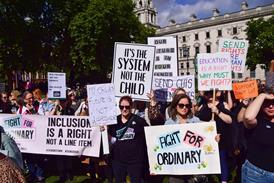

















The government has continued to bat away proposed amendments to the Courts and Tribunals Bill that would have watered down its plans to curb jury trials as part of wider efforts to cut the Crown court backlog. However, an important amendment on specialist rape courts - a Labour manifesto commitment – will now be voted on next week.
The public bill committee met twice this week to scrutinise the legislation and debate various amendments tabled by MPs opposing the proposed restrictions on jury trials. So far, the government has retained the first two clauses of the bill, which remove the rights to elect a jury trial and to object to a venue, after nine committee members voted in favour of retaining them as currently drafted. Six voted against.
The committee debated but had yet to vote on an amendment that would prevent the reforms applying to cases currently awaiting trial. Urging MPs to vote against the amendment when the time comes to vote, courts minister Sarah Sackman said cases would not be returned to magistrates’ courts where defendants had elected for trial in the Crown court.

Sackman said the application of ‘procedural changes’ to existing cases is consistent with long-standing legal practice, as seen with judge-only trials for jury tampering under the Criminal Justice Act 2003.
The committee has yet to debate and vote on an amendment tabled by Labour MPs Charlotte Nichols and Stella Creasy on specialist courts for sexual offences and domestic abuse cases. Rebel Labour MPs believe specialist courts and Crown court efficiency measures would render curbs on jury trials unnecessary.
Only two more days of line-by-line legislative scrutiny in the Commons remains - next Tuesday and Thursday. If the government defeats all the amendments, MPs who abstained from voting during the bill's second reading could decide to vote against the bill when it returns to the Commons chamber for its third reading. The bill passed the second reading by 304 votes to 203. No votes were recorded for 88 Labour MPs.
The government could also struggle to get its jury reforms through the Lords. While the Parliament Act provides for the will of the elected chamber to prevail, peers could rely on the convention that this does not apply to non-manifesto measures.
This article is now closed for comment.





2 Readers' comments