






















The senior costs judge today delivered a shock to medical agencies by introducing a cap to the cut they can take from their mark-up on experts' fees.
In JXX v Archibald Senior Costs Judge Rowley concluded that there was no requirement for medical reporting agencies to provide a breakdown equivalent to that produced by solicitors in their bill of costs. This was because MRO fees were to be treated as a disbursement rather than outsourced solicitors’ work.
But Rowley went on to say that the mark-up on expert fees – effectively the agency’s cut – should be limited to no more than 25%. In two joined-up cases, the court heard that the percentage uplift claimed by medical agency Premex was either 35% or 45%, while for Medical and Professional Services Limited (MAPS) the mark-up was anything from 20% to 104%.
Rowley said the fees charged by agencies ‘plainly reflect variations resulting from ongoing commercial relationships between the solicitors and MROs rather than any case-specific factors. There is nothing wrong with those relationships but they are not any basis on which to allow any particular percentage between the parties,’ he said.
‘The court needs to take a cautious approach… I am not persuaded that even the range of 30% to 53% generally charged can be considered reasonable, let alone the outlier percentages, some of which result from fixed sums having been claimed.’
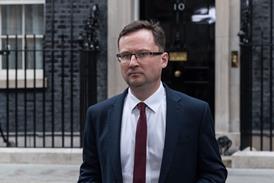
Responding to the judgment, Wayne Brannan (pictured), commercial director at Premex said: 'Whilst it is undoubtedly good news to have confirmation that MRO fees are disbursements and do not require "breakdowns of breakdowns", nor contain any specific unrecoverable elements within them, the assessment of a recoverable fee of 25% of the expert’s fee is both disappointing and concerning.'
Claimant lawyers will be satisfied with some elements of the judgment: the court rejected the defendants’ argument that fees should be assessed at nil and found it was acceptable for MROs to charge on an ‘in the round’ basis.
But the 25% cap is likely to cause significant concern among medical agencies who have business plans relying on higher mark-ups.
Premex said it is examining the ‘procedural, commercial and market implications’ of the judgement, adding that the fee ultimately awarded presents ‘significant difficulties’ if applied more broadly in other cases.
Brannan added: ‘The costs associated with procuring medical evidence at scale and particularly with doing so on deferred payment terms are real. The logical conclusion of a decision like this is that injured claimants (who in the main cannot afford to pay up front for medical evidence) will again suffer either by having to cover these costs from damages or simply be unable to access medical evidence at all.’
Even Rowley acknowledged in his judgment that one or even both sides may seek to appeal.
Slater and Gordon, which represented one of the claimants in JXX, welcomed that the court had confirmed that MROs play an important role in the PI market, but was ‘concerned’ at the 25% limit that was not put forward by either side in the case.
Madelene Holdsworth, managing director at Slater and Gordon, added: ‘Our relationship with key MROs such as Premex enables us to offer Claimants access to a nationwide network of experienced experts. We are considering the Judgment in further detail with our clients and the other parties involved in the case. Defendants have deep pockets when defending cases and we are keen to ensure that Claimants continue to have access to high quality expert evidence to enable them to pursue their cases with the ‘equality of arms’ required to ensure justice. We are considering whether this Judgment facilitates that aim.’
Henrietta Phillips, partner and head of legal services at Thompsons Solicitors who act for JXX, added: 'We welcome the court’s finding that, in principle, all elements of the MRO fees are recoverable from the defendants. This is an important result for injured people, as it helps ensure they can access the independent medical evidence needed in personal injury claims, and underlines the crucial role MROs play in supporting access to justice.
'However, we are concerned that the maximum recoverable mark-up decided by the Judge will mean that, in many cases, the shortfall will be yet another deduction from claimants’ compensation. We are firmly of the belief that the system should be structured so that all reasonable costs of bringing a successful personal injury claim are fully recoverable, and that injured claimants should not be forced to fund legal costs out of the compensation intended to restore them, so far as money can, to the position they would have been in if the injury had not happened.'
This article is now closed for comment.





13 Readers' comments