





















The first appeal to reach the Court of Appeal of a decision made under the new Child-Focused Court model over access arrangements has been partly allowed. However the president of the Family Division stressed that the introduction of the CFC model 'has not altered the substantive legal framework’.
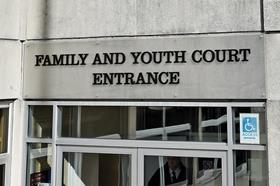
In Re C (Child Arrangements Orders; Domestic Abuse; Child Focused Court) the mother, who had made allegations against the father of domestic abuse, and coercive and controlling behaviour, appealed against a child arrangements order made in the family court in Wrexham in April. The father had previously admitted incidents of abuse towards the mother and children, and that he had subverted the previous agreed contact arrangements.
The order set out limited supervised contact between the four children and their father. The mother’s application for a non-molestation order to prevent the father from contacting her and the children was refused, as was the mother’s application for the removal or curtailment of the father’s parental responsibility. A further order was made that no application for an order relating to the children shall be made by either the mother or father without the court’s permission until April 2027.
The mother appealed against the orders, including the one barring further applications.
Sir Stephen Cobb, president of the Family Division, with whom Lord Justice Zacaroli and Lord Justice Moylan agreed, allowed the appeal in relation to the restriction on the mother but dismissed her appeal in all other respects.
The ‘introduction of the CFC model has not altered the substantive legal framework', the judgment said. The family court judge ‘indicated that he intended to conduct it in a manner consistent with the ethos of the Pathfinder model, to which he made express reference several times’ and was ‘under no illusion about the seriousness of the domestic abuse which pre-dated the resolution of the 2024 proceedings’.
Read more
Cobb found the judge did not fall into error in ordering the limited supervised contact between the children and their father. ‘It was clear to the judge, as it is clear to this court, that the father accepted that he had in several respects wrongly pushed the boundary of supervision. The father’s conduct was, in my judgment, sufficiently well understood by the judge to enable him to address the relevant risks within the framework of his order. His approach was entirely consistent with the “Guidance for Judges and Magistrates: Fact-Finding Hearings and Domestic Abuse in Private Law Children Proceedings”.’
The Court of Appeal said the judge had ‘firmly in mind the damaging effect of the father’s behaviour which had been a central feature of the proceedings which concluded in 2024’, adding: ‘This court will rarely interfere with judicial discretion as to the best order for meeting a child’s needs when arrived at after careful reference to the welfare checklist.’
Allowing the appeal in relation to the parties being allowed to seek applications with the court’s permission, the CoA said: ‘It was wrong to equate the mother’s litigation conduct, or any contribution she may have made to the continuation of the proceedings or the abuse within the family, with that of the father.’