























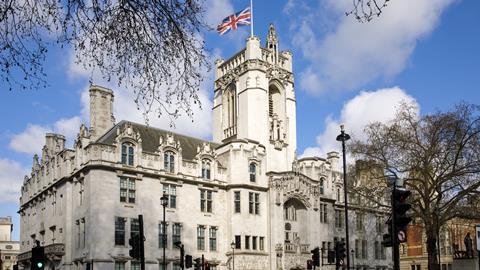
A Supreme Court judgment tomorrow could have wide-ranging implications for the application of protections for part-time workers.
Augustine v Data Cars was brought by taxi driver Warren Augustine against his employer, Data Cars Limited, over a period of employment in 2016. The issue under scrutiny by the Supreme Court is whether prevention of less favourable treatment regulations apply if a worker’s part-time status is a cause, but not the sole cause, of their less favourable treatment.
During his employment, Augustine paid Data Cars a ‘circuit fee’ of £148 each week for access to its booking dispatch system. The fee was the same for all drivers, regardless of whether they were full-time or part-time.
In an employment tribunal, Augustine argued the circuit fee was contrary to Regulation 5 of the Part-Time Workers Regulations, as part-time workers had to pay a higher fee per hour worked than full-time workers. The tribunal rejected his case; the Employment Appeal Tribunal and the Court of Appeal both dismissed his appeals.
The appeals found that, even if treatment had been less favourable, the case would fall to be dismissed on the basis that the charging of the circuit fee was not on ‘the sole ground that he was a part-time worker’.
The decisions referred to a decision of the Court of Session in McMenemy v Capita Business Services, which held that Regulation 5 of the Part-Time Workers Regulations applies only if the employer intends to treat the employee less favourably for the sole reason that they are a part-time worker.
EAT and the Court of Appeal dismissed Augustine’s case on the basis that the fee was set at the same level for all drivers, irrespective of number of hours worked, and that the driver’s part-time status was not the ‘sole reason’ for the less favourable treatment.
The Court of Appeal was divided on this issue and in the judgment it noted that while the relevant EU Part-time Work Directive did mention ‘solely’, it believed the language indicated that part-time status needed only to be the ‘predominant reason’ for unequal treatment. The Court of Appeal referred the case to the Supreme Court to resolve this inconsistency.
Data Cars argues that Regulation 5 of the Prevention of Less Favourable Treatment applies only if a worker’s part-time status is the sole cause of the less favourable treatment.
Lawyers for the company argued it is insufficient to bring less favourable treatment within the scope of the Part-Time Workers Regulations ‘if a worker’s part-time status is only one material factor among others’.




No comments yet