
















The trend of senior judges announcing their departures has continued, with Supreme Court president Lord Reed set to retire next year.
Reed, who took on the role six years ago this month, is already the court’s longest-serving president and has confirmed he will step down on 10 January 2027.
The Supreme Court said he had made an ‘exceptional contribution to the development and administration of the law, and is held in the highest regard for his legal scholarship, sound judgment and dedication to public service’.
By the time of his retirement Robert Reed, Baron Reed of Allermuir will have served for seven years as president, for 15 years as a Supreme Court judge and for 28 years as a member of the senior judiciary.
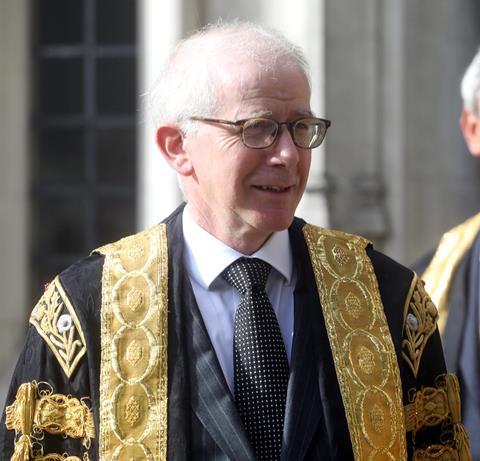
‘It has been a privilege to serve the citizens of the United Kingdom, and the people of the Privy Council jurisdictions round the world,’ he said. ‘It has also been a pleasure to work with my colleagues on the court, present and past, in developing the law and strengthening the administration of justice.’
It is expected that the lord chancellor will convene an independent selection commission, under rules set by parliament, to fill the vacancy resulting from Reed’s forthcoming retirement.
The Edinburgh University graduate qualified as an advocate in Scotland and as a barrister in England. He practised at the Scottish bar in a wide range of civil cases, and also prosecuted serious crime.
Read more
Reed took on a lower public profile compared to his predecessor Lady Hale, who had overseen major constitutional cases during her tenure relating to Brexit legislation.
But he still had to rule on some of the most notable cases which have often been subjects for public controversy and conflict. In 2023, he jointly gave lead judgment in the Rwanda case, ruling that the government’s policy for dealing with asylum seekers was unlawful.
He also wrote the lead judgment in the cases of R v Hayes and R v Palombo, allowing their appeals and quashing their convictions for conspiracy to defraud.
He revealed in a 2022 interview with Counsel Magazine that he had been able to ‘focus more narrowly’ on the internal workings of the court compared with Hale. He had also made greater use of statistics to measure the number of judgments outstanding and the workload of each judge.
Reed’s retirement continues the trend of senior judicial figures announcing they are stepping down in recent weeks.
Earlier this month, master of the rolls Sir Geoffrey Vos announced he will retire in October, followed this week by Dame Victoria Sharp, president of the King’s Bench division, signalling she would step down in October.
Sir Andrew McFarlane, president of the family division, said in October he will leave his post this Easter.
Gazette columnist Joshua Rozenberg wrote in his Substack blog earlier this week that the rush of departures created a ‘huge challenge’ for the Judicial Appointments Commission.
This article is now closed for comment.




7 Readers' comments