






















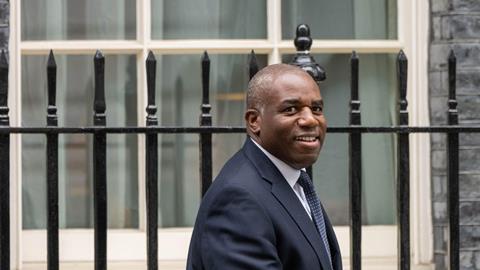
Justice secretary David Lammy has cleared the first parliamentary hurdle in his race to curb jury trials – but the fight to defeat the more controversial elements of his criminal courts reform package are far from over.
The Courts and Tribunals Bill passed its second reading yesterday, with 304 MPs voting in favour of it and 203 MPs voting against it. However, no vote was recorded for dozens of MPs, including 90 members of the Labour party, such as Karl Turner, who has vociferously opposed any curtailment on jury trials.
Turner told the Commons that he was abstaining ‘because I think there is a possibility of making progress’. He revealed that following discussions with Lammy, one of the MPs who oppose the reforms will have a seat on the public bill committee.
‘I am more confident now than ever before that the worst parts of the bill will be defeated by amendments. I sincerely ask [MPs] to let the bill pass its second reading, so that we can make progress on getting rid of the bits of this bill that are completely unworkable, unpopular, unjust and unnecessary,' Turner said.
Lammy has also promised a review on how the reforms are affecting ethnic minority people.
However, one of the most powerful interventions during the debate came from Labour’s Charlotte Nichols, who revealed that she was raped at a work event and her case took 1,088 days to reach court.
Read more
Nichols said: ‘In this debate, it feels as if experiences like mine have been weaponised and are being used for rhetorical misdirection in relation to what this bill actually is. The violence against women and girls sector has not had the opportunity to come together to discuss it, and the government’s framing and narrative has been to pit survivors and defendants against each other in a way that I think is deeply damaging.’
The bill will now move to committee stage, where the legislation will be scrutinised in greater detail. Criminal practitioner groups revealed earlier in the day that they are going through the bill with a fine toothcomb.
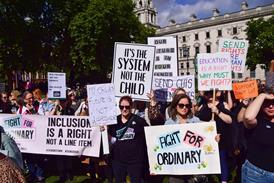
During a protest earlier in the day, Zachary Whyte, vice-president of the London Criminal Courts Solicitors’ Association, revealed that even if a defendant gets permission to appeal from the magistrates' court, and succeeds on appeal against that conviction, the judge would be able to replace it with an alternative conviction' under the bill's provisions.
Andrew Bishop, vice-chair of the Criminal Law Solicitors Association, said that if it becomes apparent during a judge-only trial that the case would attract a sentence higher than three years, the judge would have to stop the trial and start again with a jury.
This article is now closed for comment.





8 Readers' comments