





















This year’s Bond Solon Expert Witness survey reveals that pressure is mounting on the sector. Concerns about standards, fees, AI and working conditions continue to grow
In his year-end review of 2025, the chief executive of the Expert Witness Institute noted that he seems to make a statement about increasing scrutiny of the sector every year.
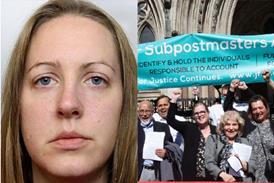
As long as Lucy Letby and the Post Office Horizon scandal remain staples of the national news agenda, Simon Berney-Edwards is unlikely to consider himself relieved of this obligation.
That scrutiny is reflected in this year’s Bond Solon Expert Witness survey, published in collaboration with the Gazette. Evolving judicial expectations and ongoing concerns about standards are adding to a multitude of pressures on experts. Others include fees, payment delays, agency charging structures and the dangers of over-reliance on AI.
Of 555 expert witnesses polled, a clear majority (51%) supported formal regulation of expert witnesses, with fewer than one in four opposed. This chimes with the key takeaways from last year’s poll.
Yet progress here has been very limited, despite concerns that the lack of independent oversight may be contributing to miscarriages of justice. Earlier this year the Family Procedure Rules were tweaked to bar unregulated experts in children proceedings, but that would seem to be about it.
So what’s going on? Or rather, what’s not going on? Perhaps ‘no one really knows what to do’, one informed source suggested.
There is a potential downside, of course. Some respondents raised concerns about the potentially unintended consequences of increased regulation. Several noted that overly burdensome requirements could discourage participation, particularly within highly specialised or niche fields.
Nevertheless, a whopping 72% of respondents identified inadequate experience and qualifications as the greatest threat to the credibility of expert evidence.
Adoption of artificial intelligence appears to have increased significantly over the past 12 months. In last year’s survey, only 20% of respondents reported using AI in their work. This year’s results suggest AI is now used across a broad range of activities, with 12% of respondents using AI regularly and 23% occasionally. But there is much further to go.
Experts remain more comfortable using AI to support administrative and information-processing tasks than for core expert witness functions. While 7% of respondents reported using AI to assist with drafting reports, this remains one of the less common applications, indicating ‘continued caution around the use of AI in forming and presenting expert opinion’, the survey notes.
If you could change one thing about expert evidence, what would it be (in order of priority)?
1. Review of fee structure and payment terms – should experts receive payment (or part-payment) on receipt of report?
2. More time to prepare reports and earlier communication between experts
3. Much more hot tubbing, to compare the reliability and credibility of experts
4. Keep expert reports brief and concise
5. Regulation of experts
6. Less confrontational cross-examination
7. Better guidance on AI use
8. Mandatory feedback from instructing solicitors
9. More efficient and effective electronic document storage
10. Expert witness training should be mandatory
11. Remove joint experts
Bond Solon/Law Society Gazette Expert Witness Survey 2026
The most commonly cited concern is the potential for over-reliance on AI at the expense of professional judgement, selected by 73% of respondents. Other frequently identified concerns include the risk of inaccurate, biased or ‘hallucinated outputs’ (40%).
‘The findings suggest that experts are less concerned about the technology itself than its potential impact on independence, objectivity and professional decision-making,’ Bond Solon’s report says. ‘These concerns align closely with the core responsibilities of expert witnesses, whose duty is to provide impartial and evidence-based opinions within their area of expertise.’
Nearly three-quarters of respondents agreed that experts should be required to disclose the use of AI in preparing reports, in accordance with the Civil Justice Council’s interim finding on the use of the technology in legal proceedings.
‘Taken together,’ the report says, ‘the results suggest an emerging consensus around the principle of transparency, although there remains considerable uncertainty regarding how any disclosure requirement should operate in practice. It will be interesting to see how much guidance the CJC provide in their final report with regard to the level of detail experts need to go into in their disclosure and whether they provide a non-exhaustive list of permitted uses.’
To finish with a hardy perennial. The issue of timely payment has featured prominently in past surveys, even as far back as 2015, and remains a persistent concern. Many respondents also referred to increasing timetable pressures, late provision of evidence, court adjournments, and the logistical challenges associated with managing large and complex digital records.
‘Experts are facing increasing pressure not only from the substance of their professional work but also from the procedural and administrative demands that surround it,’ Bond Solon’s report concludes.
The full survey can be read at: bondsolon.com.
Supporting documents
Click link to download and view these filesBond Solon Expert Witness Survey 2026 - Final version
PDF, Size 2.32 mb













No comments yet