





















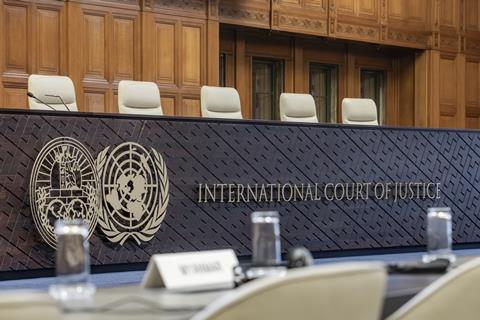
Today’s finding by the International Court of Justice that Myanmar committed genocide against its Rohingya minority population raises the spectre of US sanctions on the United Nations’ top court.
The ruling, by a panel of 15 international judges, was handed down in The Hague this morning. It is the first time that the ICJ has found a state guilty of genocide offences. The extension of its jurisdiction raises the possibility of further genocide actions, including against the US ad its allies.
US ambassador to the UN, Mike Waltz, warned the court last month that the US ‘will not allow globalist, faux-judges to weaponise the law against our troops, undermine our sovereignty, or put American lives at risk’.
In The Gambia v. Myanmar: 11 States intervening), the court found that the Asian state committed genocide against the Rohingya group in northern Rakhine State during the 2017 'cllearance operations', in violation of its obligations under the Convention on the Prevention and Punishment of the Crime of Genocide.
The court also found that Myanmar violated its obligations under the Convention to prevent the commission of genocide by individuals acting alongside its security forces, to punish genocide and other acts enumerated in the convention, and to enact the necessary legislation to give effect to the convention. However, the court found that Myanmar did not directly and publicly incite the commission of genocide by private persons against the Rohingya group.
Dr Irene Pietrropaoli, senior fellow at the British Institute for International Comparative Law, described the ruling as a historic moment for international justice. 'For the first time, the International Court of Justice has found a state responsible for committing genocide. The court found that Myanmar’s security forces committed genocidal acts, but that they acted with the specific intent to destroy the Rohingya as a group. It rejected the argument that the atrocities could reasonably be explained as counter-insurgency operations, finding instead that the evidence established an intent to destroy the Rohingya as a group. The judgment will shape the interpretation of genocide law.'
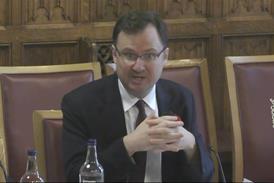
Sir John Jenkins, senior fellow at thinktank Policy Exchange, said: 'The judgment of the International Court of Justice today could expose British ministers, officials and armed forces to increased legal risk of malicious accusations of genocide. Our history, our allies and our armed forces could all be in the firing line.'





7 Readers' comments