





















At the Association of Costs Lawyers conference, practitioners were optimistic that AI will not be replacing them any time soon. However, clients are pressing for efficiencies to be reflected in their invoices
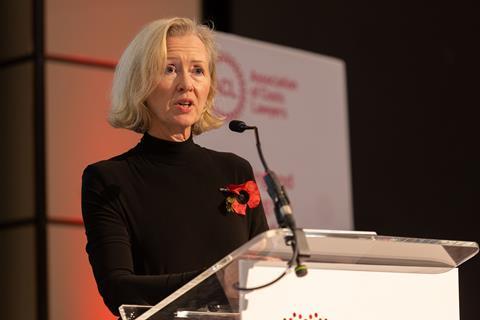
It might be a stretch to describe the Association of Costs Lawyers annual conference as upbeat, but the prevailing mood when delegates met last week was undoubtedly positive.
One might imagine costs law to be particularly susceptible to the onslaught of artificial intelligence. It is heavily document-based and involves applying established rules, procedures and precedents. Penny-pinching clients might ironically see the input of costs lawyers as one cost they can do without.
However, members gathered in London last Friday were keen to stress that this is a niche area of law where human involvement will always be imperative.
Joanne Powell, costs lawyer and deputy director at the Government Legal Department, said: ‘AI is great for all sorts of things such as drafting, document reviews and data extraction. It is also the case that we do need that human judgement for nuanced, tactical strategy. At this point in time, AI cannot do those things for you. Human expertise will remain irreplaceable.’
Lady Justice Cockerill, deputy head of civil justice, was among the members of the bench urging costs lawyers not to be despondent about technology. ‘We have to ask ourselves again and again what exactly is the machine doing,’ she said. ‘Can it tell you work [on a bill] was necessary or explain why a category is appropriate? Has it actually understood what was at stake for the parties?’
If the need for human costs lawyers is established, the nature of their work may not remain unchanged. There was an acknowledgement that the elephant in the room for most lawyers – how to charge for work where AI has radically reduced the time it took – needs to be addressed.
Cockerill said: ‘If technology enables some facets of the work to be carried out more efficiently, how do you replicate that gain in what the client pays? A changing model of producing legal work is going to take us into a changing conversation about exactly how the value of that work is measured and charged.
‘There is also scope for costs lawyers to lead that conversation.’
'We are adapting how we are working, and we don’t just ask for price. We ask, are you using AI, and please be transparent around the pricing and savings for that'
Fiona Day, Lloyds Banking Group
The Law Society addressed this point last month, amending its guidance to state that where fees are time-based, only time properly spent may be recorded and billed. It added: ‘If AI is used in billing arrangements of this kind, you and your organisation should not bill for the time that a task would have taken had AI not been used.
‘Time spent appropriately operating the AI system, reviewing and verifying its output, making revisions and applying professional judgement may be charged where consistent with the client care letter.’
The same theme arose at a recent event hosted by data and intelligence firm Chambers featuring interviews with senior in-house lawyers.
General counsel at multinational Compass Group, James Kachel, said his company had completed several acquisitions worldwide over the past few years, but despite law firms’ heavy investments in AI, invoices for legal spend per transaction were not falling far enough. ’The firms that will come out on top of that are those that can drive those efficiencies and share the benefit with their clients,’ he said.
Fiona Day, deputy general counsel at Lloyds Banking Group, said: ‘We are adapting how we are working, and we don’t just ask for price. We ask, are you using AI, and please be transparent around the pricing and savings for that. And we will continue to request that transparency.’
If costs lawyers are to lead this conversation, it would also help if they were civil to each other.
The ACL conference focused not just on AI but on practitioner conduct towards their opposite numbers. Costs Judge Joseph noticed a trend among lawyers, in responding to their opponents’ costs bill, to repeatedly use the same dismissive word: ‘laughable’. Such bravado and discourtesy may impress clients, said Joseph, but does little to impress judges.
‘I strongly encourage you to stop that,’ he added. ‘It is not necessary to be quite so rude about the drafting of your opponent.’
Given the ongoing conversation about the human input necessary in the costs law profession, it was a reminder, perhaps, that humanity in its broader sense is the quality needed most of all.













No comments yet