

















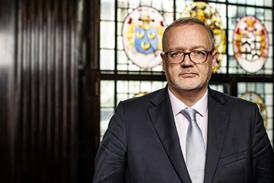





The Law Society’s president and other office-holders could be paid significantly more under proposals to remove the ceiling on their compensation.
At next month’s annual general meeting, members will vote on scrapping a 26-year-old bylaw amendment that pegs the president’s pay to a district judge’s salary. DJs presently earn £144,000 a year.
It is more than 30 years since provision was first made in the Society’s Royal Charter to pay ‘reasonable sums to compensate the president, vice-president and deputy vice-president’. The bylaws provided that Council may determine the amount of compensation payable to the president, and that 50% and 25% of this sum would be paid to the VP and DVP respectively.
In 2000, the AGM passed bylaw amendments to limit the compensation payable to the president to the equivalent of a district judge’s salary, retaining the same percentages.
‘Following a comparative and independent benchmarking exercise and research supported by external specialists, it was resolved by the Council in July that it would now be appropriate to remove the current limit on compensation payable to office-holders,’ the AGM notice says.
‘This would permit democratically elected Council members to have flexibility to make future adjustments to the compensation levels payable to office-holders that appropriately reflect the scope and purpose of their roles and duties – not only as ambassadors [for] the Society and solicitor profession, but also their governance responsibilities including membership of the Society Board and various committees.’
Some – but by no means all – UK professional bodies treat the presidency as a voluntary or largely honorary position undertaken by a senior practitioner, with travel and official expenses reimbursed rather than a salary. The Bar Council is one body that does pay its leader – the bar chair – who last year received nearly £250,000 pro rata.
A Society spokesperson said: ‘The role of president is a significant leadership position with substantial responsibilities. Following a review, the Council has concluded that it is appropriate to update the bylaw on office-holder remuneration. The proposed change does not set a new level of remuneration, nor does it guarantee any increase. The amendment simply allows Council to determine compensation through the Society’s established governance processes and taking account of the demands of the role.’





3 Readers' comments