



















Law firms are already changing their business models to cope with AI-equipped clients - and tomorrow’s lawyers will need very different skill sets to cope with this 'TikTok generation,' the master of the rolls told legal educators yesterday.
In his latest speech on legal practice and the AI revolution, Sir Geoffrey Vos repeated predictions that AI would take over much judicial decision-making. However he stressed that human lawyers would still have a role. 'Lawyers will be needed as much, if not more, in the machine age. But they should not expect to be doing exactly the same things in exactly the same way, because new technologies will change much of that.’
The future will require 'a very particular kind of client-facing lawyers to lead and guide both tech-savvy and tech-sceptic clients through the minefield of AI-driven justice'. Instead of seeking legal advice, clients willl come to seek a lawyer’s confirmation of the correctness of what AI has told them, Sir Geoffrey told the Association of Law Teachers’ annual conference at the University of Exeter Law School.
However they will be reluctant to pay the same fee for such assurance. 'This phenomenon is already leading to reduced law firm recruitment.' Lawyers of the future will need to adapt their business models considerably, he said. This will involve using AI themselves.
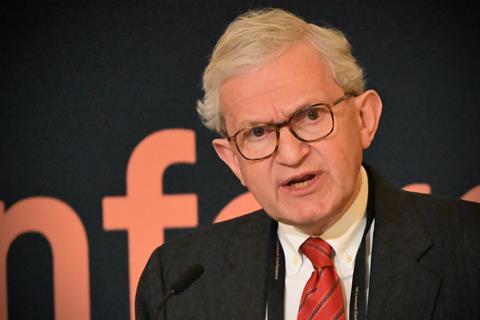
Legal training will therefore have to cope with 'radical and fundamental' changes in legal practice over the next 20 years, Sir Geoffrey noted. The ethics of justice 'will need to be taught through a new lens'. Data protection and data security 'will no longer be an optional segment' of legal training. Lawyers and judges must also be able to spot fakes generated by AI. 'These skills are more critical now than ever before.'
On the future of judges, the master of the rolls said it was 'inevitable that basic economics will dictate, at the very least, that routine judicial decision-making will, in the timescale I am talking about, be informed or directed by machines'. However this does not signify the end of human judges. 'Humans will remain crucial to the development of legal principles as human culture and human society change. Machines will probably not be able to develop the law for the benefit of humanity in the way that human judges can do.'
Humans will also remain instrumental in helping other humans towards the understanding and acceptance of machine-made decision-making, Sir Geoffrey said.
This article is now closed for comment.





10 Readers' comments