





















The government has launched a consultation on whether the standard of proof for 'short-form' inquest conclusions of unlawful killing should be changed back from the civil to the criminal standard.
'Short-form' conclusions comprise of one or two words on the cause of death. 'Narrative' conclusions are more descriptive.
In the six years since the standard of proof for unlawful killing at inquests in England and Wales was lowered, the number of juries at inquest reaching this conclusion each year has diminished. The consultation highlights concerns that the change has ‘caused confusion’ and created an ‘uneven playing field’.
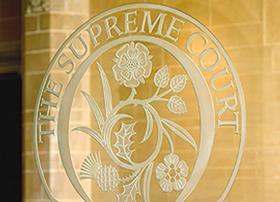
In 2020, the Supreme Court in R (on the application of Maughan) v Her Majesty’s Senior Coroner for Oxfordshire clarified that all short-form and narrative inquest conclusions should be determined on the civil standard of proof. This marked a change for the threshold applied to the short form-conclusion of unlawful killing which, until that point, had been determined at the criminal standard.
Despite the lowering of the threshold, the number of unlawful killing conclusions at inquest halved from 0.4% of all inquest conclusions in 2019, to 0.19% in 2020, then comprised 0.3% in 2021, 0.14% in 2023 and 0.2% in 2024 and 2025.
In 2024, the then lord chancellor Shabana Mahmood commissioned a Rapid Review, which recommended wider public and stakeholder engagement on whether the civil standard remains appropriate. The consultation, launched this week by justice minister Alex Davies-Jones, seeks views from stakeholders on whether 'in light of the perceived impacts and wider implications of applying the civil standard [on the balance of probabilities] to the short-form inquest conclusion of unlawful killing, a return to the criminal standard [beyond reasonable doubt] should be considered'.
Davies-Jones said: ‘I encourage anyone with an interest in the coronial system and access to justice issues to engage with this consultation and share their views.’
Rosanna Ellul, policy and parliamentary manager at Inquest, said the charity will push back against any attempts to reverse the current position. ‘Inquest [is] very concerned about the Ministry of Justice’s new consultation into the standard of proof for unlawful killing conclusions at inquests and fears it forebodes yet another rowing back of the rights for bereaved families. At a time when government [is] making progress for families with Hillsborough Law, there is a risk they give with one hand and take away with the other,’ she said.
Describing the Supreme Court’s judgment as ‘a step forward' for state and corporate accountability, Ellul added: ‘Since this ruling, there have been unlawful killing conclusions related to deaths in prison, mass fatalities, deaths in healthcare settings and violence against women and girls. The lower standard helps to ensure inquests can hold state agents to account, better identify wrongdoing and lead to the learning bereaved families desperately want to see.’
Landmark Chambers' Harriet Wakeman described the potential reversal as ‘highly significant’. She said: ‘The consultation only contemplates a potential change to the short-form conclusion of unlawful killing, which raises an interesting question about the interaction between the proposed higher standard of proof for that conclusion and the continued availability of a narrative conclusion on the balance of probabilities, particularly where a narrative conclusion may address substantially the same circumstances as a short-form conclusion of unlawful killing.’
Amanda Gray, a partner at Mishcon de Reya, told the Gazette: 'A potential shift in the standard could have significant implications for stakeholders who find themselves involved in a coronial process where these circumstances arise - often authorities or state-run entities are involved. The consultation is, however, an early step in the process - to assess opinion and gather information. There is no guarantee that changes will be made, nor is there an indication at this stage of a wider application to other forms of inquest conclusion.'
The consultation relates only to the coroner’s definition of ‘unlawful killing’. It is not connected with the government’s recent decision to exclude criminal offences related to unlawful killing, such as manslaughter, from the Sentencing Act’s Progression model.
The consultation closes on 7 December.





No comments yet