























An oat drink company has failed in its Supreme Court appeal to trade mark the term ‘post milk generation’ and include it on its products.
Lord Hamblen and Lord Burrows, in a joint judgment with which Lord Hodge, Lord Briggs and Lord Stephens agreed, said that Oatly’s use of ‘post milk generation’ breaches regulations barring use of the word ‘milk’ on non-dairy products.
In Dairy UK Ltd v Oatly AB trade association Dairy UK applied for a declaration that Oatly's trade mark registration was invalid. It argued that there was a prohibition under assimilated EU law that ‘designations’ of milk and milk products can be used only for products referred to in the annex of the 2013 Parliament and Council Regulation (EU) No. 1308/2013. Those listed products are derived from animal milk.
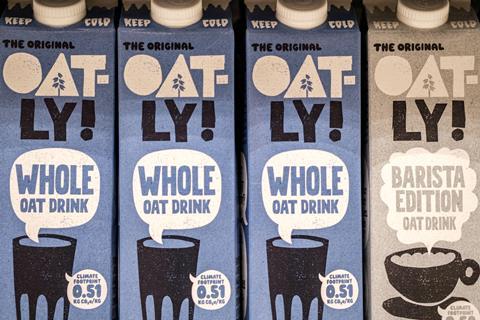
The Intellectual Property Office finding in Dairy UK’s favour was overturned by the High Court. However the Court of Appeal upheld the IPO’s finding and Oatly appealed to the Supreme Court.
Today judgment found that ‘post milk generation’ falls within the scope of the 2013 Regulations ‘on that basis that it uses the term “milk” as a designation’. Dismissing Oatly’s ground of appeal that ‘post milk generation’ is describing a characteristic quality of the product, the judges said it was ‘far from clear that that trade mark is describing any characteristic of the contested products’. Rather, the trade mark is describing the targeted consumers. 'In so far as it is describing a characteristic quality of the product, it is doing so in an oblique and obscure way and is certainly not doing so “clearly”.’
Read more
Richard May, a partner at international firm Osborne Clarke, said the judgment provided ‘important clarity for food and drink brands operating in the UK’ but that terms such as oat milk now carried ‘heightened legal risk in the UK market’.
He said: ‘It confirms that, even post-Brexit, the UK will continue to take a strict approach to the use of protected dairy terms, closely aligned with the EU regime. In practical terms, terminology such as ‘oat milk’ or ‘plant-based cheese’ now carries heightened legal risk in the UK market,' he said.
‘More broadly, the judgment signals that UK regulators and courts are likely to take a robust approach to so-called "category borrowing" across regulated sectors. Businesses building brands around legally defined product names – whether in dairy or elsewhere – should expect careful scrutiny and plan their brand strategy accordingly.’
This article is now closed for comment.





15 Readers' comments