






















Proposed new rights for unmarried couples would amount to 'state forced marriage', a former Bar Standards Board chair said as the government’s consultation on new financial rights and obligations approaches its closing date.
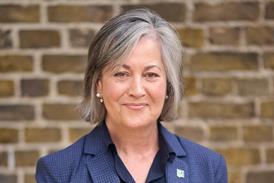
In a letter to justice secretary Alex Norris, crossbench peer Baroness Deech (Ruth Deech) said the government risks 'automatically imposing marriage-like legal rights and obligations on cohabiting couples without their consent'. The letter also points to research suggesting that the majority of couples have 'heard little or nothing about the cohabitation proposals'.
Under the proposed reforms, couples who live together for three years, or who have a child together, would automatically gain legal rights and obligations covering property, pensions, financial provision and inheritance.
Deech, who has described the proposals as 'state forced marriage', said: 'Marriage and civil partnerships are legal relationships that people freely choose to enter into. Under these proposals, similar legal obligations could arise automatically without either partner ever making that choice, and people may not even realise those obligations have been imposed on them.'
Read more
Her remarks follow a Survation poll of 2,060 UK adults conducted in July which found 72% of respondents had heard little or nothing about the cohabitation proposals.
Deech said the survey results show the 'government has no clear public mandate for automatically imposing marriage-like legal rights and obligations on cohabiting couples without their consent'. She added: 'Ultimately, the issue is not whether the law should provide additional remedies. It is whether significant legal rights should arise because adults choose them, or because the State presumes they intended them.
'I believe those rights should continue to be based on informed consent. It’s your relationship, your choice.'
Under the proposals in the government’s 'A fairer end to relationships' consultation, if a relationship ended, either partner could ask the courts to make orders over homes, pensions, property and other assets.
Couples wishing to remain outside the new legal framework would both have to opt out, obtain independent legal advice, make full financial disclosure and sign a formal legal agreement.
If one partner refused, the automatic legal framework would apply. Qualifying cohabitants would be granted automatic inheritance rights when a partner dies without leaving a will.
The Survation survey was commissioned by campaign group Your Relationship Your Choice, funded by public relations executive David Prescott. Responses showed 37% supported the proposals after they had been explained, while 41% remained undecided, and 22% opposed them.
The public was evenly divided on whether reform is needed at all, with 42% saying the current law is broadly adequate, compared with 41% who believe new rights are needed.
Family specialist Clare Radcliffe, a partner at London firm Mishcon de Reya, said the government should reconsider the criteria for inclusion in the new rights. 'Three years when you are young and haven’t got any children and are just starting out is not the same as three years when you are 35 and in a relationship. Care will be needed to ensure that the identification of potential claimants is not too broad,' she said.
'Take the parent of a 21-year-old who gave money to put down a house deposit so their child could save money on rent after graduating university, then after a year the child’s girlfriend moved in. That parent would have to be alive to these possibilities.'
The consultation closes on Friday. A Ministry of Justice spokespersons said: 'This new framework will offer eligible cohabiting couples, in committed romantic relationships, a distinct and different set of rights from married couples, helping to preserve the sanctity of marriage.
'With more than 3.5 million cohabiting couples and widespread confusion about their rights, it addresses a clear gap in the law. Unlike marriage, there would be no automatic 50:50 split of assets on separation, and people would generally keep what they legally own.
'This is an open consultation, inviting views from the public and experts, and the government will consider the findings of the consultation carefully before finalising policy.'
This article is now closed for comment.






12 Readers' comments