






















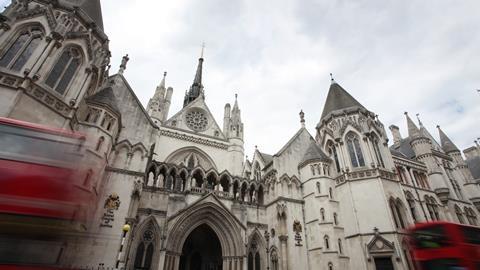
A solicitor who was convicted of ‘tipping off’ has had his application for leave to appeal against his conviction refused by the Court of Appeal.
R v William Osmond is the first case about the tipping-off provisions in section 333A(3) of the Proceeds of Crime Act 2002 to reach the Court of Appeal. William Osmond, admitted in 1979, is believed to be the first solicitor prosecuted for the offence.
Osmond was convicted in 2023 and was later sentenced to nine months’ imprisonment, suspended for 18 months. The tip-off followed a request for information by the Serious Fraud Office in its investigation into mining company ENRC. Osmond, a senior partner of Osmond and Osmond Solicitors at the time, had acted in the purchase of an £8 million home in Mayfair by a client who was then under investigation.
The SFO had required Osmond to treat the request for information as confidential and, the judgment said, ‘referred expressly to the offence of tipping off’.
In his appeal, Osmond argued that the judge had ‘unfairly narrowed the scope of the defence case that could be put before the jury by making rulings of law on issues which should have been left to the jury’.
However Lord Justice Males, who sat with Mrs Justice Cutts and His Honour Andrew Lees, said the judge’s pre-trial rulings had been ‘necessary to ensure that the case was dealt with efficiently and expeditiously, as required by the overriding objective…and that the jury was enabled to focus on the real issues in the case’.
He said the prosecution ‘made its case clear before the trial’ adding: ‘It is fundamental to our system of criminal justice that it is for the prosecution, who bring the case, to decide what charges are to be brought and to frame the indictment accordingly.’
The judge was ‘right to rule that the prosecution was entitled to advance this case’ and there ‘was no question of usurping the jury’s function’.
The judgment added: ‘There was and could be no dispute that there was in fact an investigation into allegations of money laundering. The real issues were whether his disclosure was likely to prejudice that investigation, and whether Mr Osmond knew or suspected the likelihood of such prejudice.’
The appeal judges also found the trial judge had been right to rule on other points – both questions of law which did not depend on any evidence – which were part of her pre-trial rulings. They ‘agree[d] with her reasoning and conclusions’.
Refusing leave to appeal, the judges added: ‘because (as we are told) this is the first case about the tipping off provisions in section 333A(3) to reach this court, we give leave for this judgment to be cited’.