





















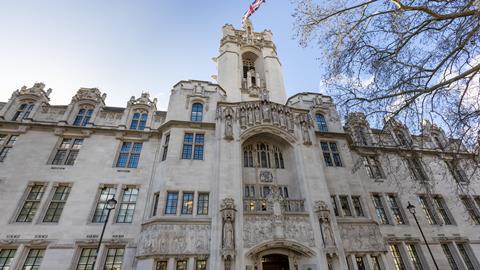
The Solicitors Regulation Authority will head to the Supreme Court over the High Court decision over the regulator’s right to access documents and information subject to legal professional privilege.
In September this year, the High Court found the SRA does not have the power to requisition such material under s.44B of the Solicitors Act 1974. Mr Justice Butcher ruled that the SRA cannot require regulated persons to produce documents or information which is subject to their clients’ legal professional privilege, and that privilege is not waived.
The regulator has used s.44B for many years and without challenge to obtain LPP material from regulated persons.
Normally, a High Court decision is appealed through the Court of Appeal. However, the SRA has been granted a leapfrog certificate, meaning the permission hearing can go straight to the Supreme Court. The certificate is granted if a case is considered to have a point of law of general public importance and arguable grounds of appeal.
The regulator must now seek permission from the Supreme Court directly. If permission is not granted, the SRA can then go to the Court of Appeal.
Jonathan Peddie, executive director of investigations, enforcement and litigation at the SRA, said: ‘I am pleased to see that the trial judge has recognised that this decision raises points of law of general public importance and that there are arguable grounds for appeal and has issued the leapfrog certificate.
‘We will now seek permission from the Supreme Court in the hope that it will address the matter urgently, given its importance to the effective regulation of the profession.’
Read more
The litigation arose from an SRA investigation which began in 2023 into the conduct of defamation firm Carter-Ruck while acting for businessman Mohamed Amersi.
Amersi instructed Carter-Ruck in a defamation claim against former MP Charlotte Leslie which was dismissed by the High Court in June 2023. The Court of Appeal refused permission to appeal. Leslie said at the time she would be making a complaint to the SRA about the firm. In a statement at the time, Carter-Ruck ‘strongly rejected’ any suggestion of misconduct.
Carter-Ruck sought a declaration that the SRA is not entitled in law under s.44B to require the production of material subject to LPP. The SRA sought a declaration that it does have this entitlement.
The regulator argued that it has power to require production of documents subject to the client’s privilege on the basis of ‘statutory override’: namely that s. 44B provides that power and overrides the client’s LPP.
A date for the Supreme Court permission hearing has yet to be listed.
This article is now closed for comment.




15 Readers' comments