
















Readers of around Obiter’s age and above may recall chess world champion Gary Kasparov’s pair of six-game matches against the IBM super-computer Deep Blue, played in 1996 and 1997. The matches were a dramatic demonstration of the abilities of both Kasparov and Deep Blue.
Something of that atmosphere attended a contest held after hours in the Royal Courts of Justice this week. The University of Law London Alumni Network organised what it believes to be a first – a fictitious family law case appeal, in which two ULaw alumni argued one side, an AI tool the other.
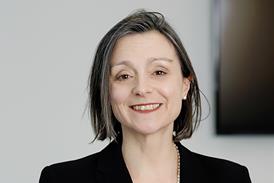
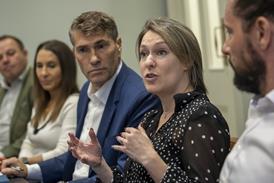
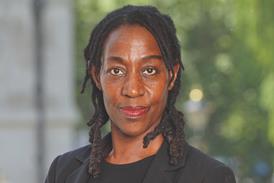
An eminent panel of judges heard the case: former president of the Supreme Court Lord Neuberger; Nadia Beckett, solicitor and arbitrator; and Dorothea Gartland KC.
The matter at hand was an appeal in the fictitious Re A (A Child). A’s parents had separated, an acrimonious split, and after a while A’s contact with her father had ceased entirely. The court order being appealed, obtained by the father, was for unsupervised contact to resume, and for A, now aged seven, to spend half of all school holidays with her father. There were allegations from A’s mother of coercive and controlling behaviour by A’s father, and A had an expressed a preference for no unsupervised contact (though ‘influence’ of her view by A’s mother was alleged).
Arguments before the appeal court centred on whether in making its order for unsupervised contact the lower court had failed to apply a welfare checklist (practice directive 12J). The allegations of coercive and controlling behaviour had not, the appellants lawyers argued, been adequately explored. The lower court, however, had identified no safeguarding issues.
According to the organisers, the scenario was ‘deliberately chosen. These are questions of judgement, credibility and the weight of evidence about a child’s welfare rather than questions with a clean legal answer, which makes them the hardest test of what an AI advocate can and cannot do’.
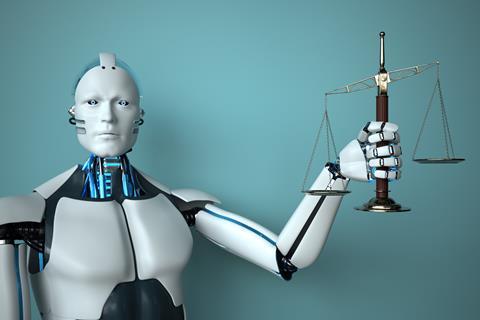
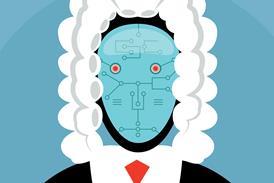
The ‘AI Moot Bot’ appeared for the father, programmed by Adam Curphey, author of Law, Reinvented: AI Transformation in Legal Practice, and director of innovation and AI at a City law firm. It was decided not to give the bot a human name. (Obiter would have been tempted to pump for, say, ‘Andrew McFarlane’ or ‘Jo Delahunty’.)
Due to an IT compatibility issue, the bot’s answers could not be connected to the court’s speaker system, so Curphey read out its skeleton argument. Questions from the judges were typed for the bot by Curphy and its answers read out for the court. Microphones were also unavailable (our tech-keen master of the rolls, take note!).
Junior lawyers Mariana Drinkwater (who lead) and Michelle Price, both ULaw alumni, appeared for the appellant.
The judges retired to consider, and on their return, Neuberger said they had decided a welfare checklist had not been applied by the judge, and that allegations of coercive and controlling behaviour should have been explored, but were not. The appeal was allowed. ‘For the interim, the current order is set aside,’ fellow judge Becket added.
So, a win for the humans.
How did the humans and the bot do? It was a fairly daunting bench for Drinkwater and Price to face, who afterwards had praise and encouragement from Neuberger.
AI Moot Bot made a promising start with its skeleton. But, Gartland KC noted, ‘the judges felt the bot gave up the ghost… [and] didn’t have heart in its own case’. When questioned it replied with ‘lots of general points’.
But there were no AI hallucinations. The bot had not been programmed to win at all costs, so its duty to the court was not in question.
Obiter caught up with Neuberger later. The bot, he thought, had the less strong case. While its advocacy had got weaker, Obiter asked, could it have won for the appellant? Neuberger thought it probably could.
But while the judges went into court feeling the appellant on balance had the stronger case, ‘good advocacy can change that’, he noted.
With justice resources under strain, Obiter also wondered about the bot’s efficiency. What sort of time had been saved by the bot? According to Curphy, AI Moot Bot had written its skeleton, the high point of its advocacy, in 15 minutes.
As a closing thought, Obiter recalls that Kasparov beat Deep Blue in 1996. But Deep Blue also ‘learned’ from the experience, and with another year’s chess under its belt, won the 1997 rematch. Watch this space.








No comments yet