























The authors of the UK Jurisdiction Taskforce’s authoritative statement on liability for harms caused by artificial intelligence obviously had fun inventing hypothetical case studies. We had everything from a multi-modal system discriminating against job applicants with facial hair to a factory robot failing to recognise an employee in a wheelchair.
But launching the report this week, the master of the rolls said his favourite example was one illustrating the question of liability for false statements made by an AI chatbot. In this case, advice that a mushroom variety called ‘destroying angel’ is good to eat. (It seems the system’s developer, unless she had labelled the content as AI-generated, would probably be liable for the loss of sales by a purveyor of ‘destroying angel soup’.)
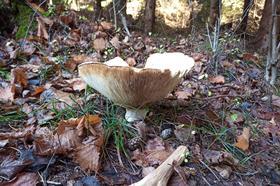
Not that we need AI to generate a myceliumic minefield. A panellist at the launch event recalled the seminal 1991 case in which the US publishers of The Encyclopedia of Mushrooms were found strictly liable for an error in its content.
UK connoisseurs of this sort of thing will recall a correction in the Guardian in May 2006: ‘On the wallchart of mushrooms included with today’s paper, the “giant funnel-cap” (Clitocybe gigantea) is described as edible. In fact…’.
Whether any litigation resulted is uncertain.







No comments yet