




















The annual King’s Counsel competition is designed to identify advocates who have demonstrated sustained excellence in the higher courts of England and Wales. It is, therefore, a process not concerned with future potential, but with recognising an established standard of professional excellence and determining whether an applicant is ready to take silk.

For those invited to interview, the process can understandably feel daunting. Careful preparation can make a significant difference. The interview is an opportunity to demonstrate, through real examples from your practice, the quality of excellence that underpins your application.
What is the panel looking for?
The assessment of excellence is drawn from cases involving ‘substance, complexity or particular difficulty or sensitivity’. Evidence is considered across four core competencies:
- understanding and using the law;
- written and oral advocacy;
- working with others; and
- diversity action and understanding.
The interview will address all four competencies, although not necessarily in equal depth. Applicants should therefore prepare with the whole framework in mind, rather than assuming that the interview will focus principally on advocacy in its narrow sense.
The panel will indicate the competency it is exploring at each stage of the interview. That said, a single question – and the answer to it – may provide evidence relevant to more than one competency.
Each interview is conducted by two members of the KC Selection Panel: one legal member and one lay member. Their role is not simply to test an applicant’s ability to answer questions under pressure. The interview is part of the wider assessment process. It provides the panel with an opportunity to gather additional information to support the written evidence already submitted by the applicant and their assessors, address any gaps and develop points arising from the application.
Competency-based interviewing
The use of competency-based interviews provides a systematic means of assessing capability. It helps to minimise the influence of subjective impressions, hypothetical scenarios and the personal chemistry between candidate and interviewer.
That approach is particularly important in the KC competition. Unlike many recruitment interviews, the process is not intended to assess potential. The question is whether the applicant has already demonstrated the standard expected of King’s Counsel and is ready to take silk.
Applicants should therefore expect to be asked for real examples from their professional experience. The strongest answers will demonstrate not merely that a case was difficult or significant, but what the applicant personally did, why they did it and what difference their actions made.
Structuring your answers
There is no prescribed formula for answering an interview question, nor is there a single ‘right’ way to respond. Nevertheless, applicants may find the STAR structure useful:
- Situation – what was the situation or challenge?
- Task – what was your particular responsibility?
- Action – what did you personally do, and why?
- Result and reflection – what was achieved? How might you have done things differently?
The discipline of this structure can be particularly helpful when the underlying case is complicated. The applicant can identify the evidence that matters without becoming lost in the detail.
A good interview answer will often take no more than two or three minutes. Simple, precise language is generally preferable, bearing in mind that at least one interviewer will be a lay person. Focus on what was challenging, exceptional or significant about the situation and, above all, on your own contribution, rather than talking about the work of a wider team.
It is rarely necessary to provide a detailed account of the substantive facts or procedural history of a case. The panel is interested in the evidence of excellence that the case provides, not in a recital of the litigation.
Do not aim for perfection
Applicants should regard the interview as a formal part of the process. It is an opportunity for the panel to get to the detail they are looking for and interrogate the information they have been given.
One useful reassurance for applicants is that the panel is not looking for flawless performance. The panel’s task is to obtain the best evidence it can of the applicant’s ability. If you lose your thread, stumble over an answer or decide that you would like to start again, simply say so.
Candidates can bring notes to the interview as an aide-memoire. Typically this may include a list of cases as examples. However, a detailed script will not help the applicant. The interview is necessarily discursive: applicants must adapt their examples to the questions asked.
It is also worth remembering that the interview does not stand alone; it sits alongside the evidence provided by the assessors. This evidence may include commentary on any identified areas of weakness. The panel will seek assurance during the interview that any such areas have been appropriately addressed, while maintaining the assessor’s confidentiality.
Preparing examples
Preparation should begin with a return to the competency framework. Each competency is multi-faceted, and applicants should consider which cases and professional experiences provide their strongest evidence of each aspect. From there, compile a short checklist of the two or three strongest examples for each competency.
The same case can, of course, provide evidence of more than one competency. But do not overlook the fact that written and oral advocacy are distinct requirements. A case that provides compelling evidence of one will not necessarily provide equally strong evidence of the other.
Nor are applicants confined to the cases listed on their application form. A more recent case may provide better evidence, particularly if it demonstrates a development in your practice. Where several examples are of comparable weight, choose the one that you can explain most clearly and succinctly.
The position is slightly different when considering ‘diversity action and understanding’. The panel recognises that applicants may not always have substantial evidence under this competency arising from the cases listed in their application. Relevant examples may instead come from work undertaken within chambers or a firm. Personal experiences and activities may also provide valuable evidence where they demonstrate a genuine commitment to equality, diversity and inclusion and to widening access and participation.
Know your application
Applicants should resist the temptation to write and memorise scripts for every conceivable question. The purpose of preparation is to ensure that you know your evidence, not to turn the interview into a recitation exercise.
However, you should know your application form thoroughly. Questions may relate to any of the cases you have identified, arise from your self-assessment, or be informed by material supplied by your assessors.
The better-prepared applicant will therefore have a clear understanding of the evidence contained in the application, the significance of each example and the particular competency or competencies it demonstrates.
Practise, but do not over-engineer
A mock interview can be extremely valuable. Ideally, ask someone who has recently been through the KC process to test your answers. Someone with experience in HR, management or interviewing may be able to provide a useful challenge, or a friend or family member with strong questioning and communication skills.
It can also be helpful to record yourself answering questions and time your responses. Listening back can reveal habits that are difficult to notice in the moment: answers that are too long, excessive reliance on jargon, unnecessary case detail or a failure to distinguish your contribution from that of the wider legal team.
There is no requirement to engage a professional coach. Coached answers are easily identified. In most cases, they are of less value to the panel than the more straightforward response and are not a good use of the time allocated to the applicant for the interview.
Competency interviews and the STAR method are widely discussed online, with the caveat that the KC interview focuses on professional excellence at the highest level of advocacy, rather than recruitment to a job.
On the day
The interview will focus directly on the competencies. The first piece of advice is simple: listen carefully to the question.
When answering, focus on the competency that it relates to. Start with the short version. Give the panel the essential point first and allow them to indicate if they would like more detail. If the panel moves you on to another question, do not assume that your answer was inadequate. It may simply mean that they already have sufficient evidence on that point and want to use the remaining time to explore another aspect of your application. That is an important distinction.
The objective is not to say everything you know about every case. It is to provide the best overall evidence of the standard you have reached.
Finally
The interview is an important stage in the KC process, but it is not determinative. It is one component of a broader assessment of professional excellence, building on the written application and the evidence provided by assessors. The information gathered from the interview forms a further piece of evidence. The panel considers this in the context of all the evidence at further panel meetings before deciding to recommend appointment.
There is extensive further guidance available through the KCA website, and the KC Appointments Secretariat can assist prospective applicants with questions about the silk process.
For those preparing for a silk interview, the central message is perhaps the simplest: know your evidence, understand what it demonstrates, answer the question being asked, and trust the experience that has brought you to the interview in the first place.
We wish all prospective interviewees every success.
See also other articles in this series, ‘Help is at hand when applying for silk’ and 'Unlocking the silk selection process’
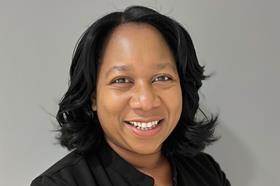
Monisha Shah is chair of the KC Selection Panel. Nicolina Andall is a legal member








No comments yet