





















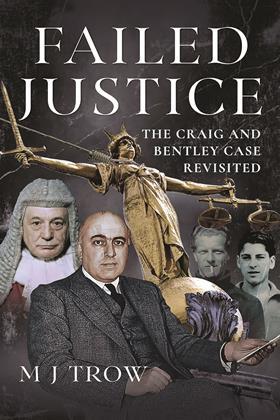
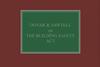
Failed Justice: the Craig and Bentley Case Revisited
MJ Trow
£25, Pen & Sword Books
★★★✩✩
In 1953, 19-year-old Derek Bentley was hanged for the murder of a police officer despite the fact that it was his associate Christopher Craig who had fired the gun that killed PC Sidney Miles. Craig was 16 at the time and too young to be executed. It was probably the evidence that Bentley said ‘let him have it, Chris’, which the prosecution interpreted to mean ‘open fire’, that convicted him. By the law of joint enterprise, both were deemed to be guilty of murder. The jury only took 75 minutes to convict them, but made a strong recommendation for mercy.
There was much disquiet about the trial, both in respect of the vulnerabilities of the defendants and the role of the press in stirring up public rage at the killing of a police officer. An appeal was unsuccessful. Hopes that the then home secretary David Maxwell Fyfe would exercise clemency were dashed.
There was a public campaign to abolish the death penalty and this case was pivotal, but this did not happen for murder until 1965. I learned from this book that the equipment for execution was retained in prison until the 1990s, in case parliament changed its mind.
The injustice of the Bentley case has been examined many times in print and on television and was also the subject of a film, Let Him Have It, starring Christopher Eccleston as Bentley. Bentley was granted a royal pardon in 1993 and the Court of Appeal overturned his murder conviction in 1998.
This book tells the complex story of the events of the night in question, the trial, and the reluctance of the establishment to acknowledge an injustice. The writer’s criticisms of the judiciary and legal profession are apparent. Reading this book made me want to look at this case more. There was Lord Goddard, the much-maligned judge, and John Parris, the defence junior who represented Craig at a time before legal aid for a fee of three guineas. The author is disparaging of Parris, whom he says was obsessed with how little he was paid. He had to travel at his own expense to London two days before the case was due to start to seek a postponement. He had been instructed on 2 December and the case was due to start two days later. It was adjourned to the 9th. Parris was subsequently suspended from practice for criticising the trial.
This is a fascinating description of a serious injustice and the efforts of many who sought to redress it.
David Pickup





No comments yet