

















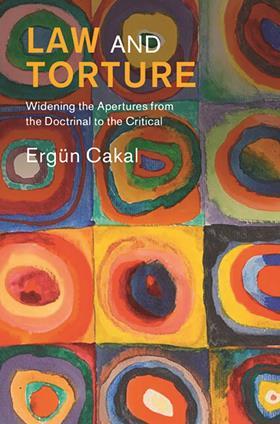
Law and Torture: Widening the Apertures from the Doctrinal to the Critical
Ergün Cakal
£105, Cambridge University Press
★★★★✩
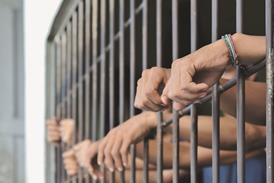
For almost 10 years, I sat in a concrete room – a cell – with a barred window looking out on to a barbed wire-topped metal fence in a compound which was a decommissioned military base. The room contained four plastic chairs and a wooden table. This was the Oakington Immigration Reception Centre, where I worked as an asylum caseworker for a now-defunct NGO.
With an interpreter, I would sit through a series of interviews – up to three per day – with those detained to be fast-tracked in the application process to claim asylum in the UK.
The first interview would be with a detainee (until ‘processing’ was complete, and often after, this was the official designation). I would provide advice and take instruction on their claim for asylum.
The second interview would be with a Home Office executive officer to conduct a statement of evidence interview.
The third interview would be with a Home Office immigration officer, who would inevitably refuse the claim for asylum.
I had never listened to an account of torture before occupying this cell. The account was mediated through the mouth of ‘my’ interpreter. The detainee could have been female or male or a child (‘unaccompanied adult’).
The ‘claim’ for asylum, with torture at its core, was founded on one of the Refugee Convention reasons. I had been trained to take instruction on ‘claims’ of torture.
Our practical objective was to secure the release of the individual from detention and the fast-track process of de facto refusal and removal. Our legal objective was to secure a grant of leave to remain.
On hearing an account of torture, I was to complete a form and submit it to a medico-legal charity which would then recommend – or not – immediate transfer of the detainee out of the process.
As a legal practitioner, I was tasked to assess – without any prior experience or education – the ‘claim’ of torture, which would be contested by the official adjudicator; the claim about the suffering and the pain and the credibility of the mediated narrator. I had to learn to listen and to look, and to think beyond the institutional cell in which we sat across from one another.
It was a claim to substantiate (in the words of the author of this volume) the threshold to attain torture to the standard required by the form, by way of blunt questions: How many times were you: a) beaten; b) electrocuted; and c) placed in solitary confinement?
This is the medico-legal lens for the practical and theoretical confrontation with the tortured subject.
Ergün Cakal is both a practitioner and an academic. He wants to locate the orthodox approach to torture within a sphere of critical thinking through ‘widening the apertures of the doctrinal’. His journey – one marked by disillusionment – is compelling, but his arrival at a critical place from which to confront the subject of torture is indeterminate.
In a series of interventions, he seeks to shift the focus to three areas which are normally excluded through the dominant juridification of torture. A theme here is the role of the institution. If the imposition of the stigma of torture (Kafka’s harrow) is agreed to be an administrative-state practice, then the space which is the cell where the tortured and the torturer appear together, and where the absolutely prohibited act is adjudicated upon, is a site of pain and law.
Cakal’s first intervention is to examine torture as exceptional suffering (for example, in comparison to degradation) (Chapter 4). The second is to interrogate the processes to substantiate the claim to torture in terms of evidencing suffering and pain (Chapter 5). The third is to introduce the emotional dimension-dynamic exempt from medico-legal procedural aspects, which encompasses hearing and seeing the tortured body in pain – physical and psychological. This perspective also engages a temporal dynamic or a movement; when law and medicine only determine the immediate moment of pain and suffering (Chapter 6).
Prior to these interventions, Cakal reviews current doctrinal scholarship, policies and practices in the field defined as torture – the word ‘torture’ being a contested term, but inhabiting a field which is one of pain and suffering, to adapt from Robert Cover’s essay Violence and the Word (which informs this work).
I have recently reviewed titles in the Law in Context series of legal treaties and textbooks which have considered the figure of the Reasonable War Criminal and the Inhuman Genocide Perpetrator. Law and Torture is a valuable addition to the series and to legal-political-philosophical thinking. It must inform any practical engagement with the tortured victim who presents the unspeakable pain – the agony – of torture to the received and required doctrinal-juridical standard of suffering.
But what should be the focus of the critical lens that the author wants to direct on to the horror of torture which literally marks the limits of language? Cakal reflects on the words of Jean Amery – a survivor of torture – who wrote of his torture: ‘beyond that there is nothing to say’. Language in the setting for the practice of torture is an exercise in power – the power to prohibit or permit.
The exercise of power should be constrained by norms of responsibility. For the advocate and the adjudicator inhabiting the field of torture, with their power of language and knowledge to declare prohibition or permission of the act, there must be an understanding of the demands – juridical-ethical-political – for taking responsibility for acts of torture and the suffering of the tortured.
Because, as Cakal states, acts of torture are not exceptional, but are part of the institutional normativity of everyday modernity.
Christopher Stanley is the Domestic and International Rights Advocate with Relatives for Justice






No comments yet