






















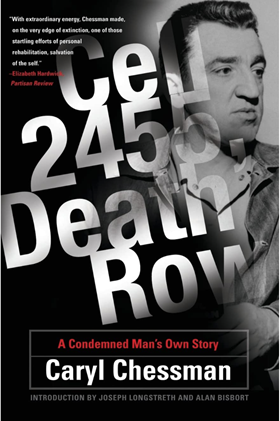
Cell 2455, Death Row
Caryl Chessman
★★★★★
Caryl Chessman wrote Cell 2455, Death Row while awaiting execution in San Quentin. He had not been convicted of murder. Instead, he was sentenced to death under California’s 'Little Lindbergh Law' after forcing victims to move short distances — in some instances around 20 feet — during a series of robberies. Under the statute at the time, that movement was legally defined as kidnapping with bodily harm. The result was a death sentence built not on homicide, but on interpretation. That is the uncomfortable legal truth at the centre of this book.
Chessman’s case quickly became a global flashpoint. His appeals ran for more than a decade, attracting international attention and repeated stays of execution before he was ultimately executed in 1960. For many observers, the legal question was never simply guilt, but proportionality: how broadly can a statute be interpreted before its consequences outpace its intent?
A reminder for counsel
For practitioners, Cell 2455, Death Row is a stark reminder to examine not only the letter of the law but the reach of its interpretation. Legal definitions are not static; they expand and contract through argument, precedent and judicial reasoning. In Chessman’s case, interpretation proved decisive. When statutory language is stretched, sentencing outcomes can stretch with it — sometimes to irreversible effect.
The book itself is measured rather than melodramatic. Chessman writes about prison routine, legal strategy, media scrutiny and the psychological reality of living under sentence of death with a composure that is more unsettling than outrage. He documents the system processing him, step by step, appeal by appeal, deadline by deadline.
Down the historical rabbit hole
Few readers will finish this book without looking up the case itself. From there, it is an easy descent into the broader history of the Lindbergh kidnapping, the evolution of kidnapping statutes, and the shifting public and legal attitudes toward capital punishment. Chessman’s story sits at the intersection of all three, making it as much a legal case study as a personal narrative.
Long before the modern true-crime industry turned historical cases into global discussion points, Chessman managed to do precisely that from a prison cell with a typewriter. His account continues to prompt reflection on how legal systems balance statutory interpretation, moral judgment and the finality of punishment.
Unsettling, absorbing, and difficult to read as mere history, Cell 2455, Death Row remains a powerful reminder that in law, definitions matter — and so do the consequences that flow from them.
Rebecca Ward MBA is director of Barristers’ Health (mental health and strategy for the legal profession)







No comments yet