





















Winning at chess mattered during the Cold War. Ideological and national pride was at stake, and the competition was keen at any engagement.
It wasn’t just headline matches like the US’s Bobby Fischer’s 1972 clash with the Soviet Union’s Boris Spassky. My uncle, who worked at the United Nations in the 1970s and 1980s, recalls how this infected the UN’s own annual chess championship, with agency staff and diplomats from East and West vying for supremacy on the board. (In the event, it was often my uncle, a Filipino, who won.)
Brought up hearing such tales, I don’t underestimate the importance of chess.
There is, then, some significance to last week’s landmark win by the Ukrainian Chess Federation (UCF) recent over the Chess Federation of Russia (CFR) at the Court of Arbitration (CAS) for Sport in Switzerland.
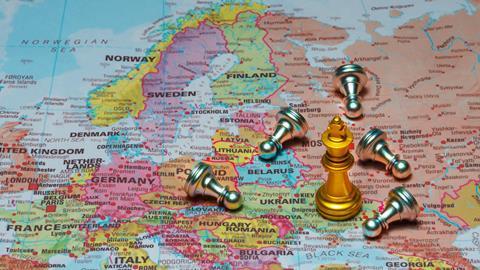
In summary, CAS ordered CFR to stop regulating chess activities in the five regions of Ukraine that Russia has purported to annex — Crimea, Donetsk, Luhansk, Kherson, and Zaporizhzhia — as well as the City of Sevastopol. If the CFR fails to do so within 90 days of the award, the International Chess Federation (FIDE) must suspend CFR for three years.
The Ukrainian win is more than symbolic, though symbols are important here.
I spoke to lawyers at international firm Covington, who acted for the UCF at the tribunal.
A first notable feature is that the Russian chess body was represented throughout, by Moscow firm SILA International Lawyers. Previously Russia has often stayed away from international disputes forums, thereby stressing that, in Moscow’s view, proceedings lacked legitimacy.
That is changing, notes Covington special counsel Paris Aboro. CRF’s presence at the tribunal, she says ‘shows the importance’ of the case, and is also ‘consistent with a changing approach in participation in cases’ against Russia and Russian bodies like the CFR.
This case matters, Covington partner David Pinsky says, because it relates to an assertion of Ukraine’s ‘sovereignty’ – asserting and confirming respect for the ‘international boundaries of Ukraine’. FIDA must recognise Ukrainian sovereignty within boundaries that include Crimea, taken by Russia in 2014.
The effect goes beyond the world of chess, important though chess is, and is a ‘practical’ as well as a ‘symbolic’ win, Pinsky notes.
Potentially it has ‘wide-ranging precedential effect’, a Covington statement notes. ‘The award stands for the proposition that no Russian sporting federation — whether chess, track and field, soccer, basketball, hockey — can organise official events or regulate their sports more broadly in purportedly annexed regions of Ukraine.’
Covington associate Alexander Gudko, a Ukrainian lawyer at Covington’s New York office, views the web of international legal cases against Russian entities as ‘a puzzle’. ‘It’s just very important to put another piece on the board,’ he notes, adding that every piece increases Russian ‘accountability’ for actions against Ukraine. It is a barrier to the incorporation of areas of Ukraine occupied or claimed by Russia into the Russian Federation.
The world of international chess has its peculiarities. The Covington team had the support of two chess grandmasters - Andrii Baryshpolets and Peter Heine Nielsen.
The potential for a precedential effect of a CAS ruling might equally have come from a ruling on basketball or soccer. But if you know countries where chess is in the culture, you’ll know that this victory has an extra symbolic value.
The first major chess championship in which UCF’s case should be applied is September’s World Chess Olympiad – to be hosted in Russia-aligned former soviet republic Uzbekistan.












No comments yet